Drawing club
Summary:
I ran a mathematical drawing class over the trimester. Click to see the activities for each week. I’ve linked a compilation of all the worksheets from the trimester.
🔗 Link to file
Each class, we started with a gesture drawing session. Sabetta ran around the room making silly poses, and we had 30 seconds to draw them. It loosened up our hands, and forced us to draw what we see instead of what we imagine. This might have been the best part of drawing club.
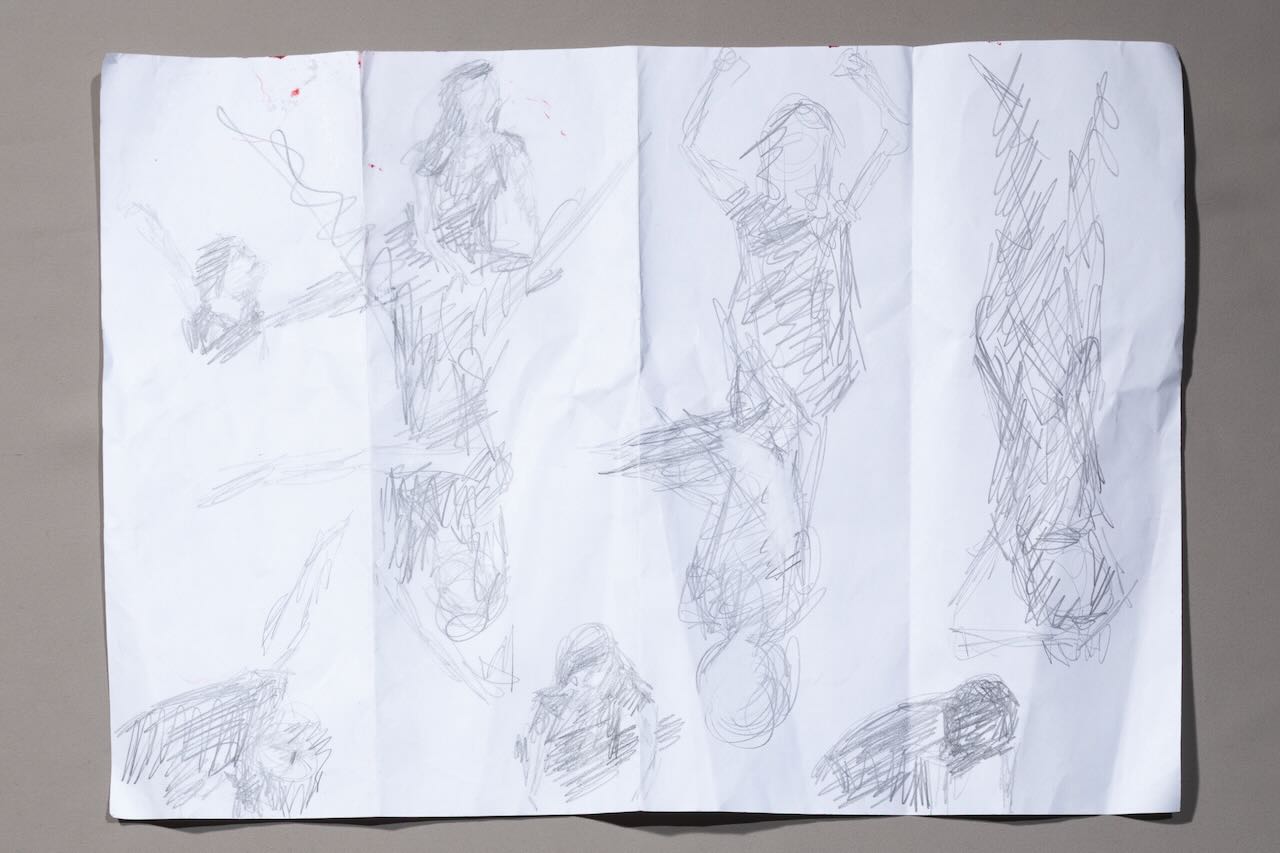
Gesture drawings
By Rebecca Field (photo credit Edmund Harris)
Introduction to sketching
Summary:
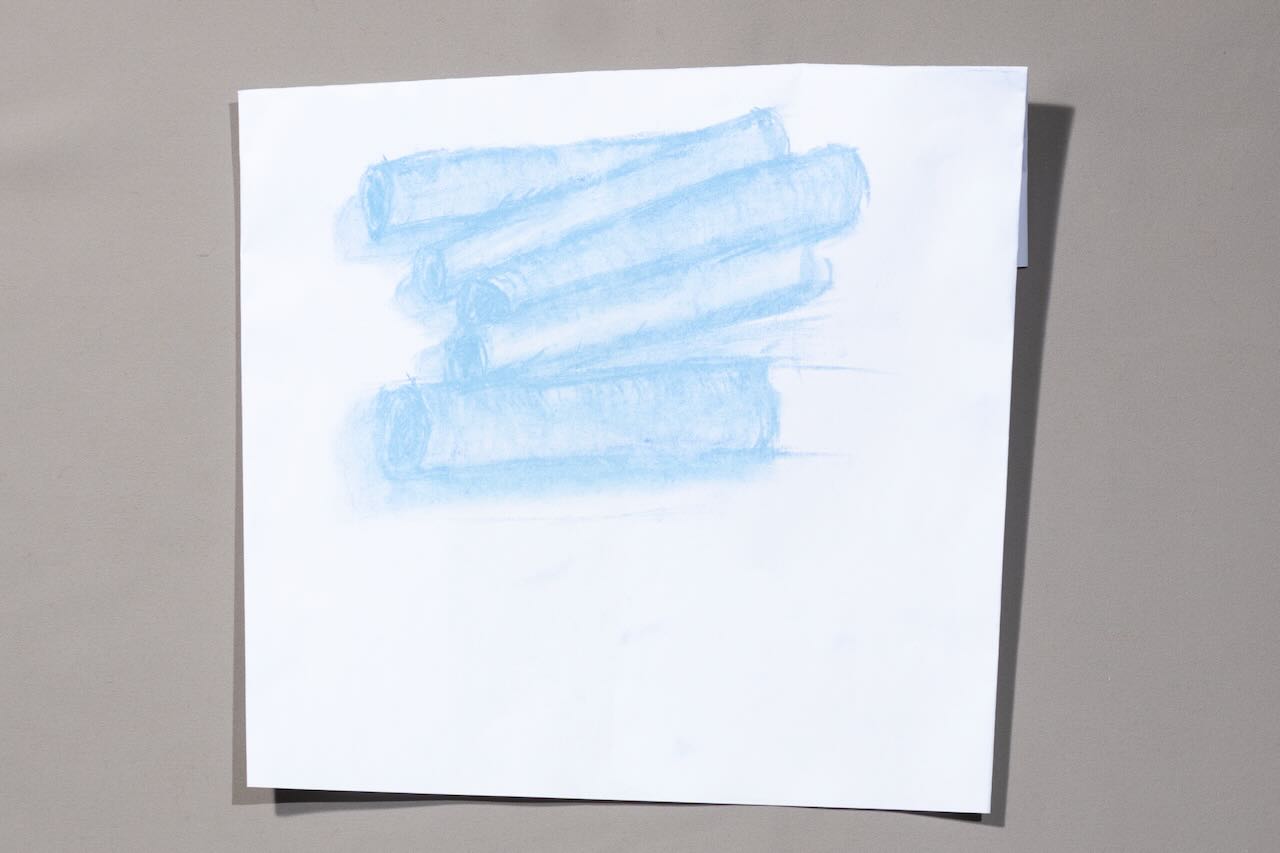
Practice with looking, seeing, and sketching. We used colored blackboard chalk for some big and bold images. Ran by Judith Lorne, drawing by Summer Haag (picture credit Edmund Harris)
Spheres
Summary:
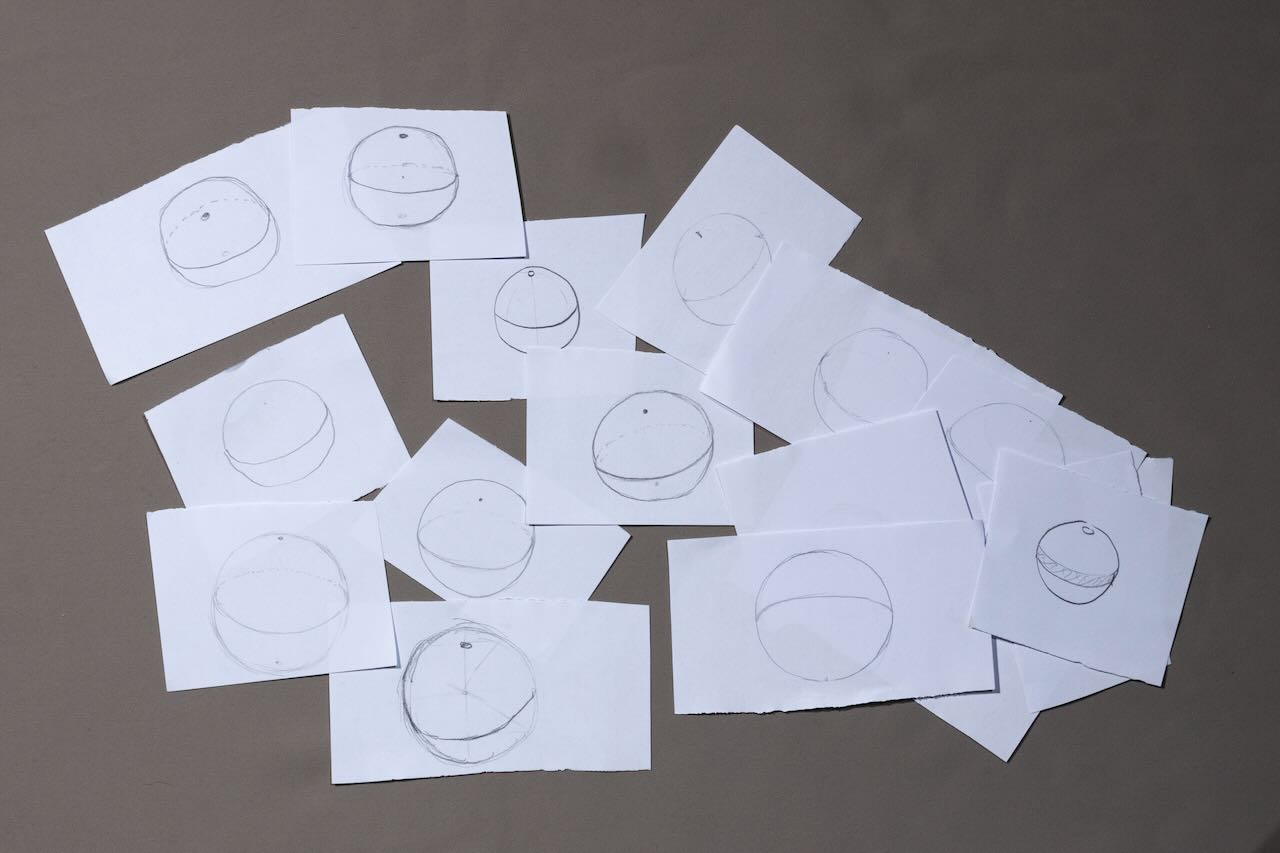
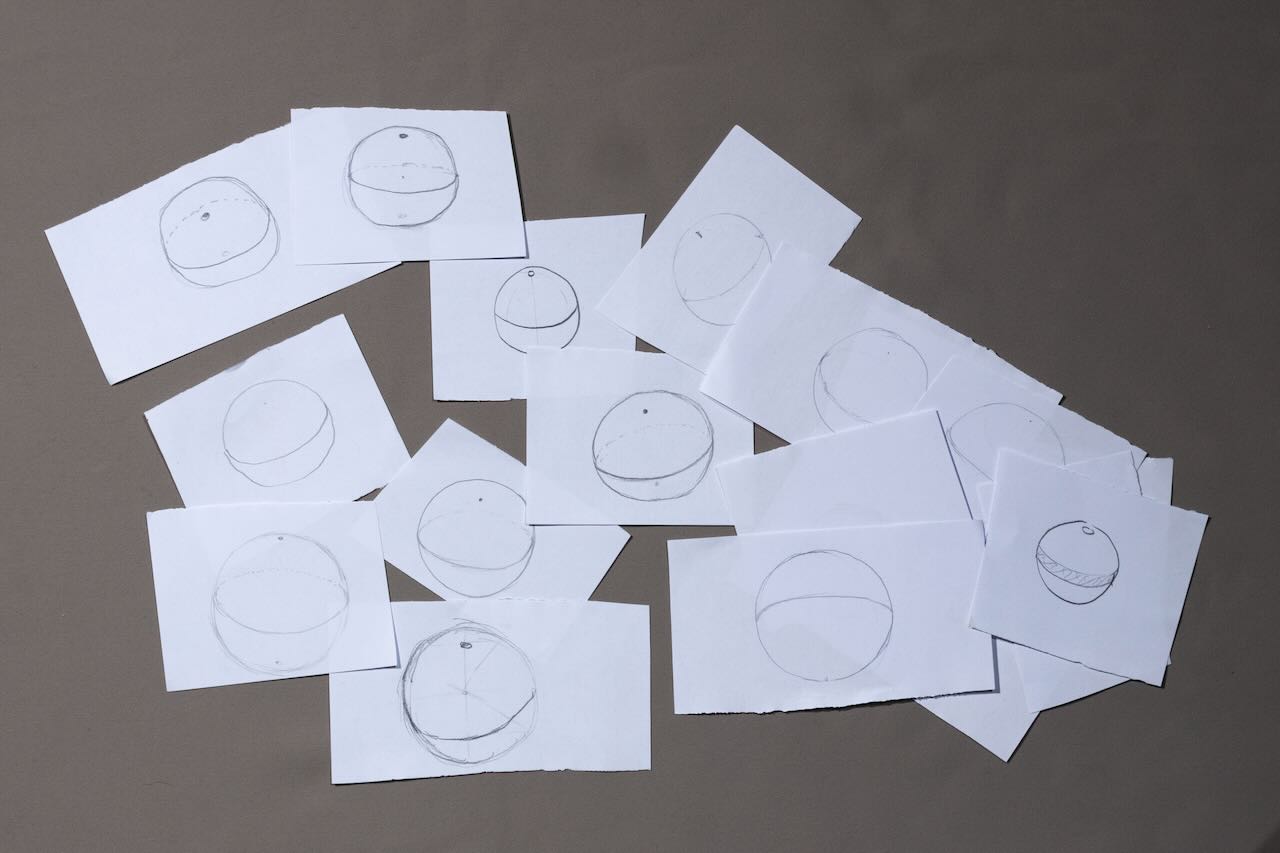
A mathematical derivation of the shading of a sphere. Following the discriptive geometers of old, I present a pencil and eyeball construction of the lines of constant shading. See attached worksheet.
🔗 Link to file
Worms
Summary:
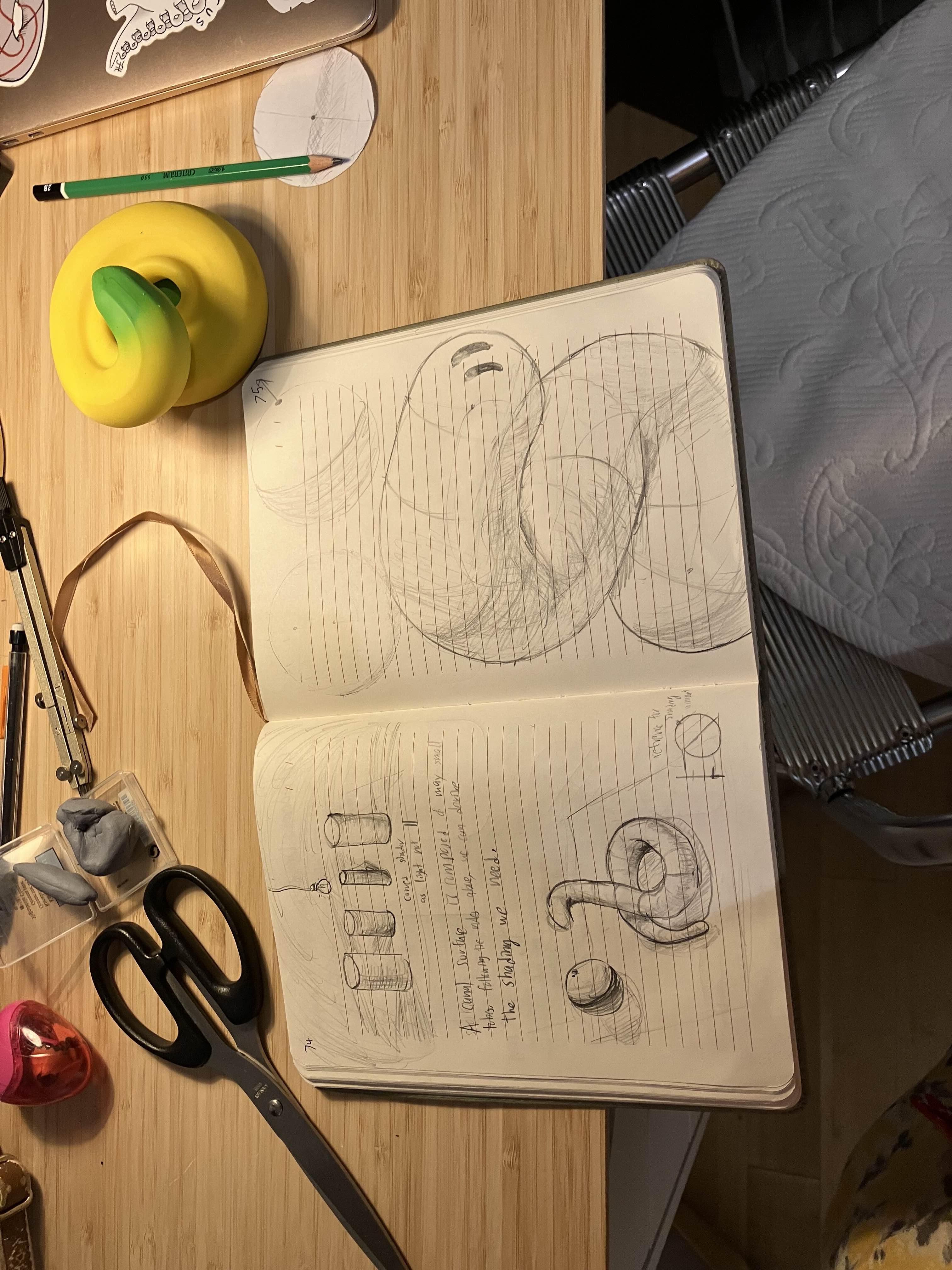
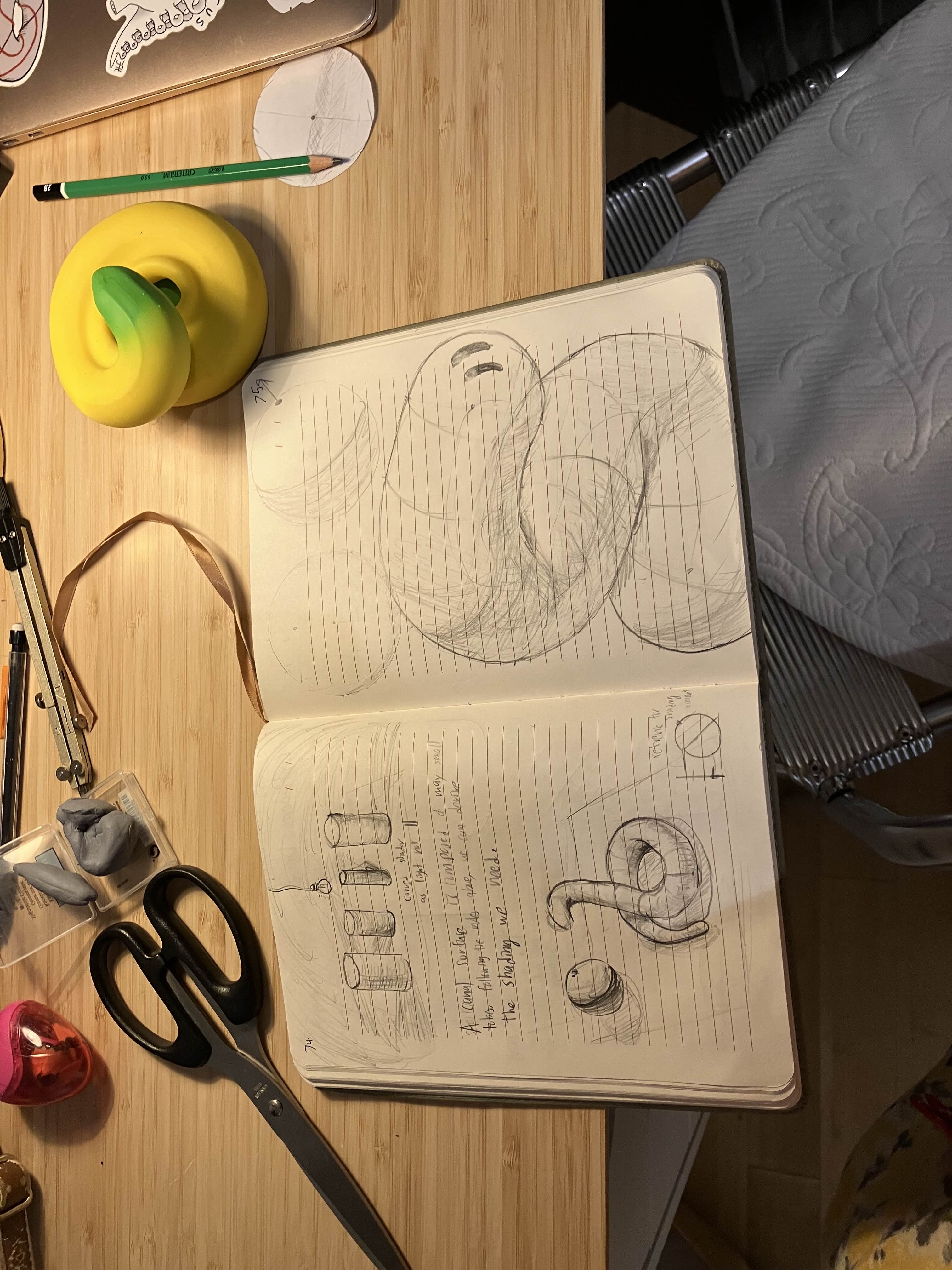
How to draw a worm. Mathematically, a worm is traced out by a sphere moving along a curve. This is called a “canal surface”. To draw a canal surface, we need to know how to draw and shade outlines, cusps, and tori. I present a method to derive the shading of a canal surface by the shading of a reference sphere. See the worksheet (which I didn’t yet finish oops)
🔗 Link to file
Seifert surfaces
Summary:
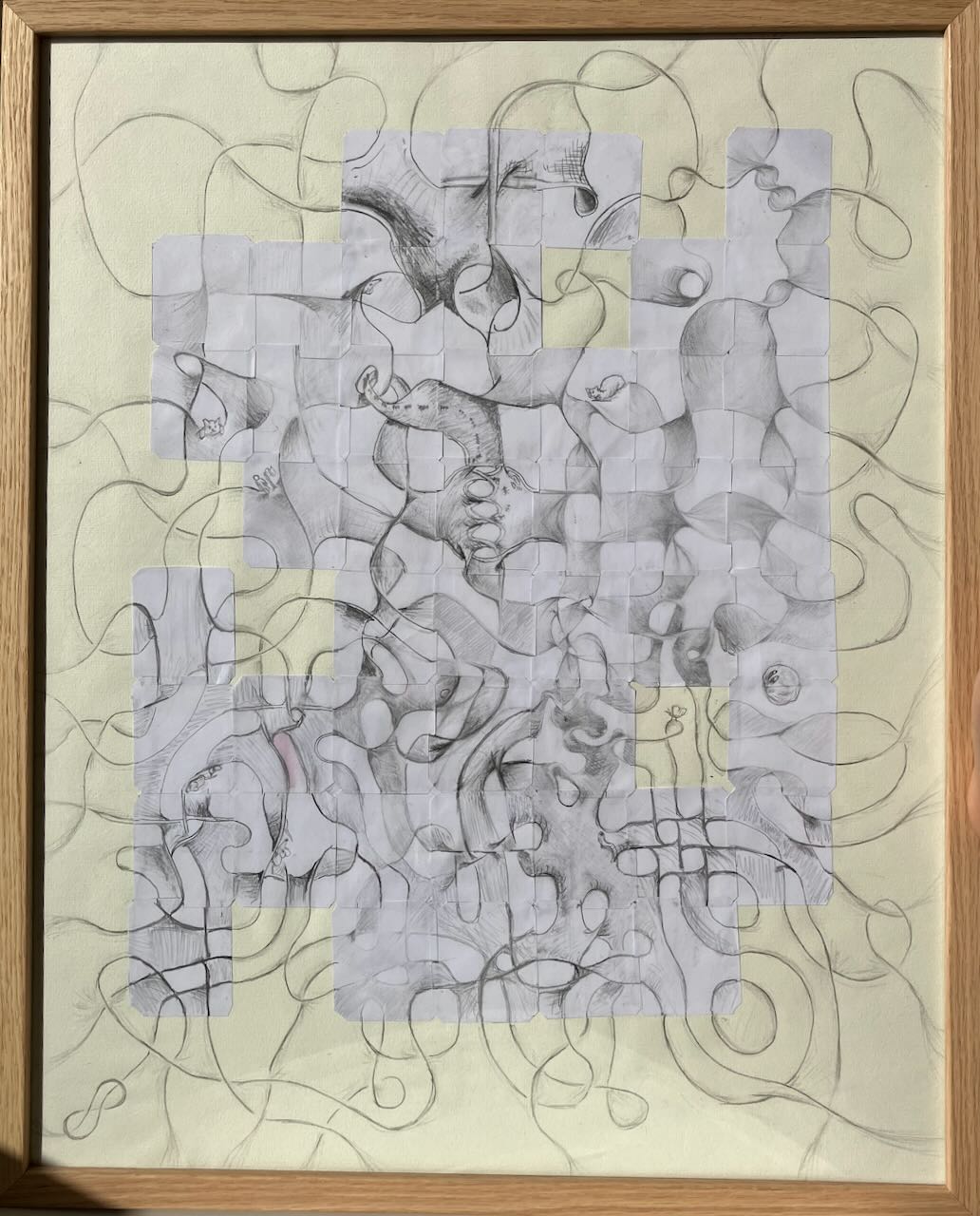
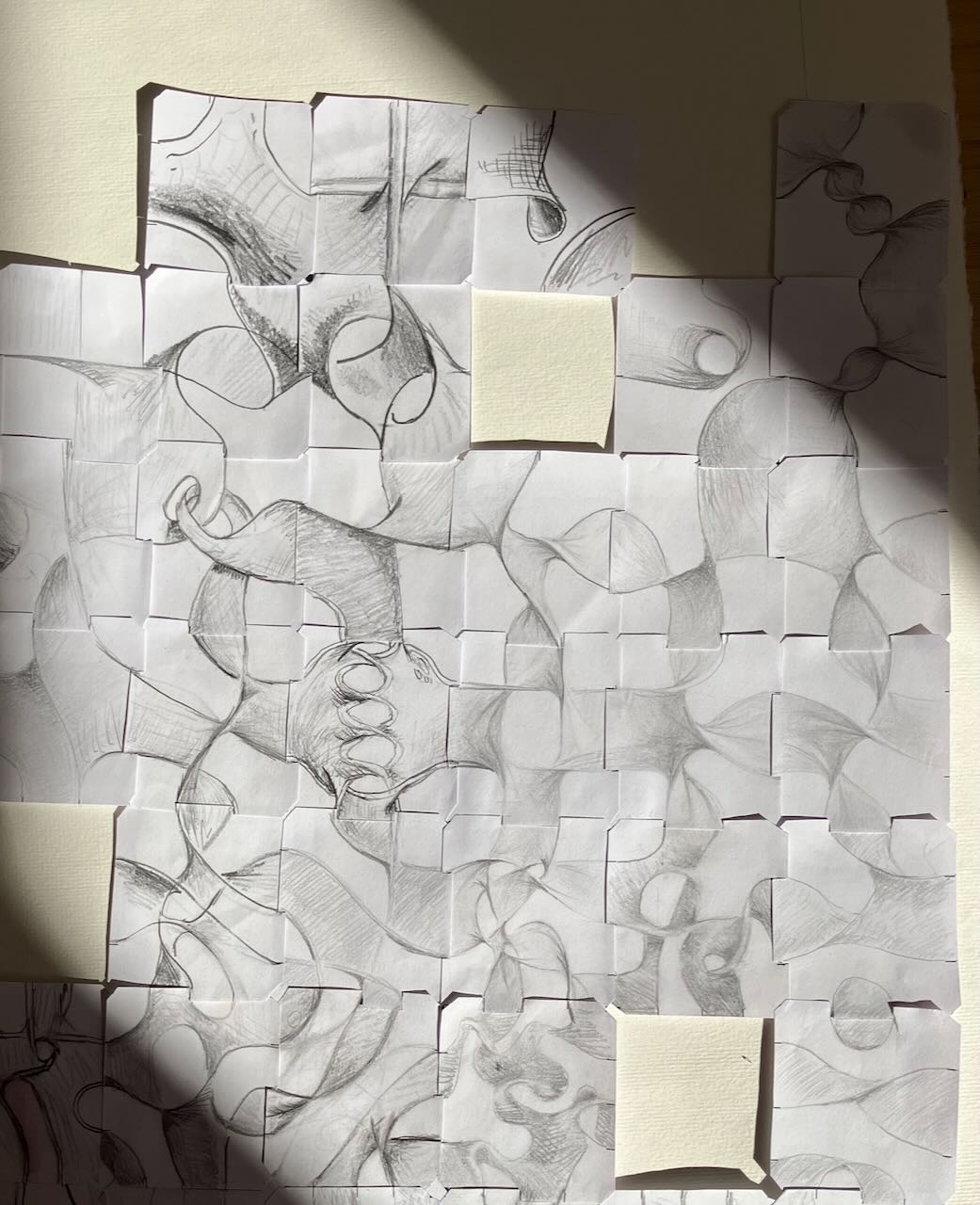
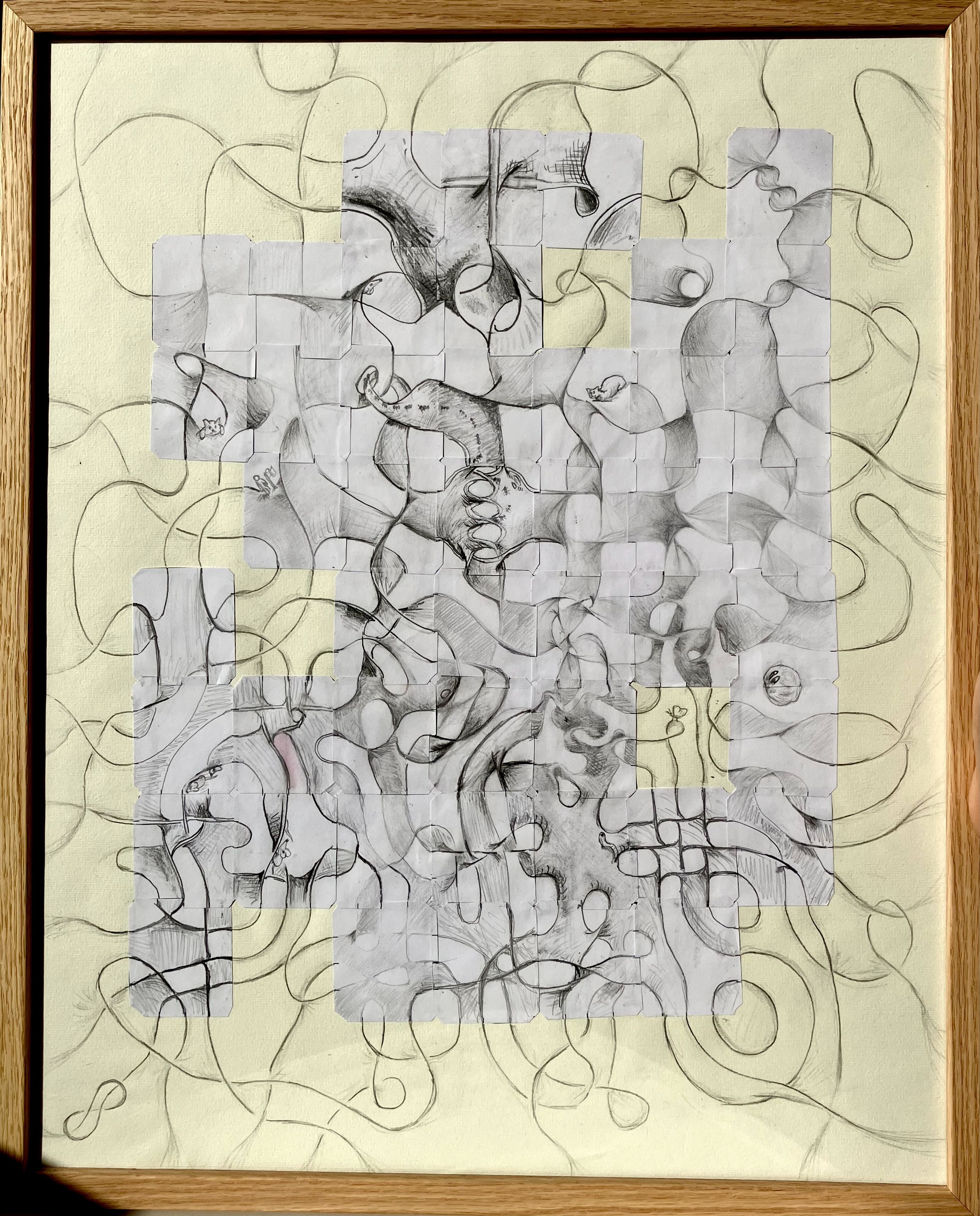
How to draw a surface bounding a knot. In the worksheet, I explain an algorithm for producing and shading these surfaces. You can make them look like they are formed by paper (zero gaussian curvature), or by soap (negative gaussian curvature). We then all produced a small surface bounding a knot on a square of paper, and put them together for a huge surface!
🔗 Link to file
Homunculi
Summary:
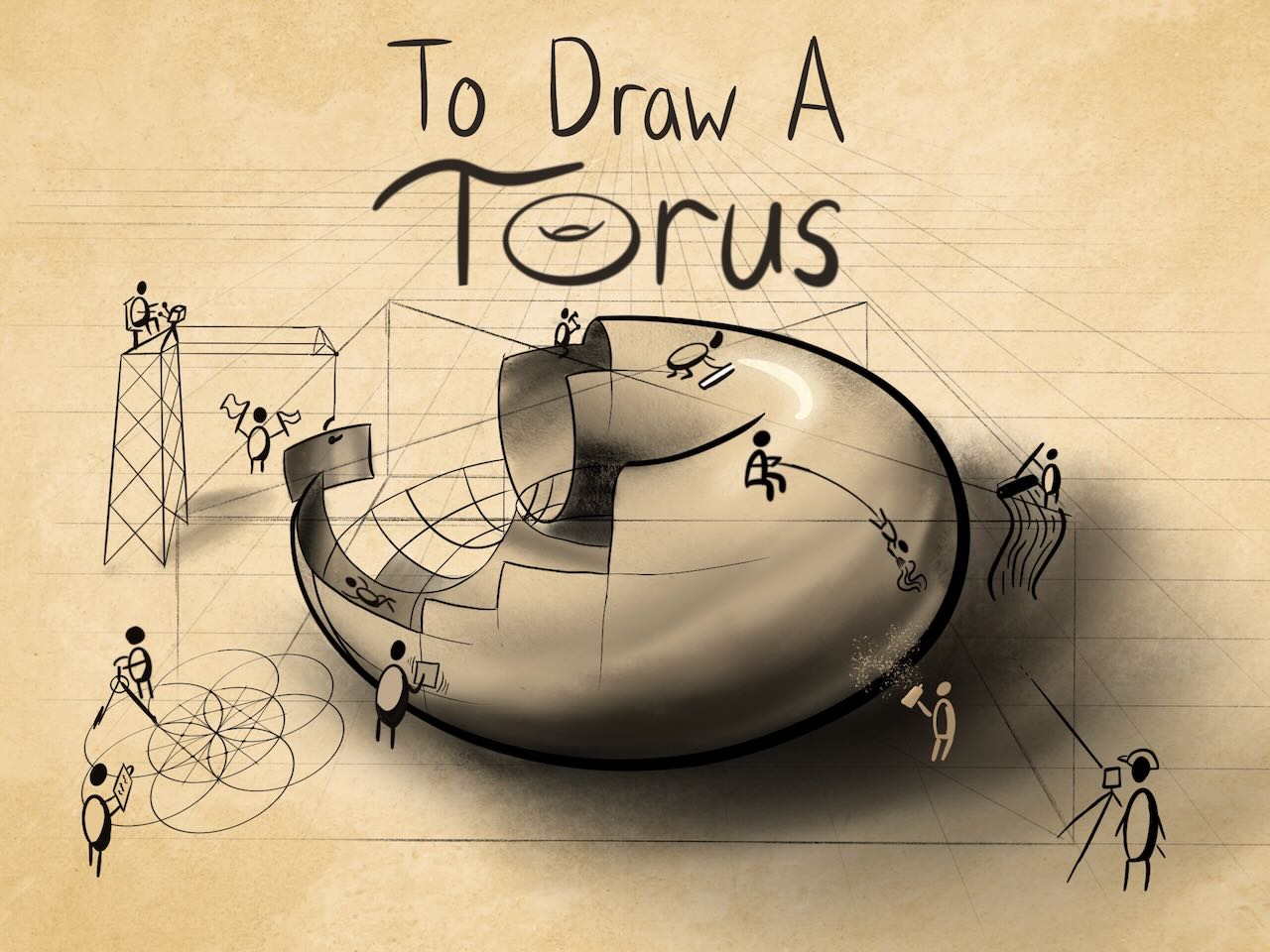
To humanize math, its good to include something to empathize with in your drawings. I call this my “homunculus”, a little critter with big eyes to direct the emotion and composition of your work. I helped everyone design their very own homunculus. Then, we envisioned a math playground, and populated it with our creatures.
Composition
Summary:
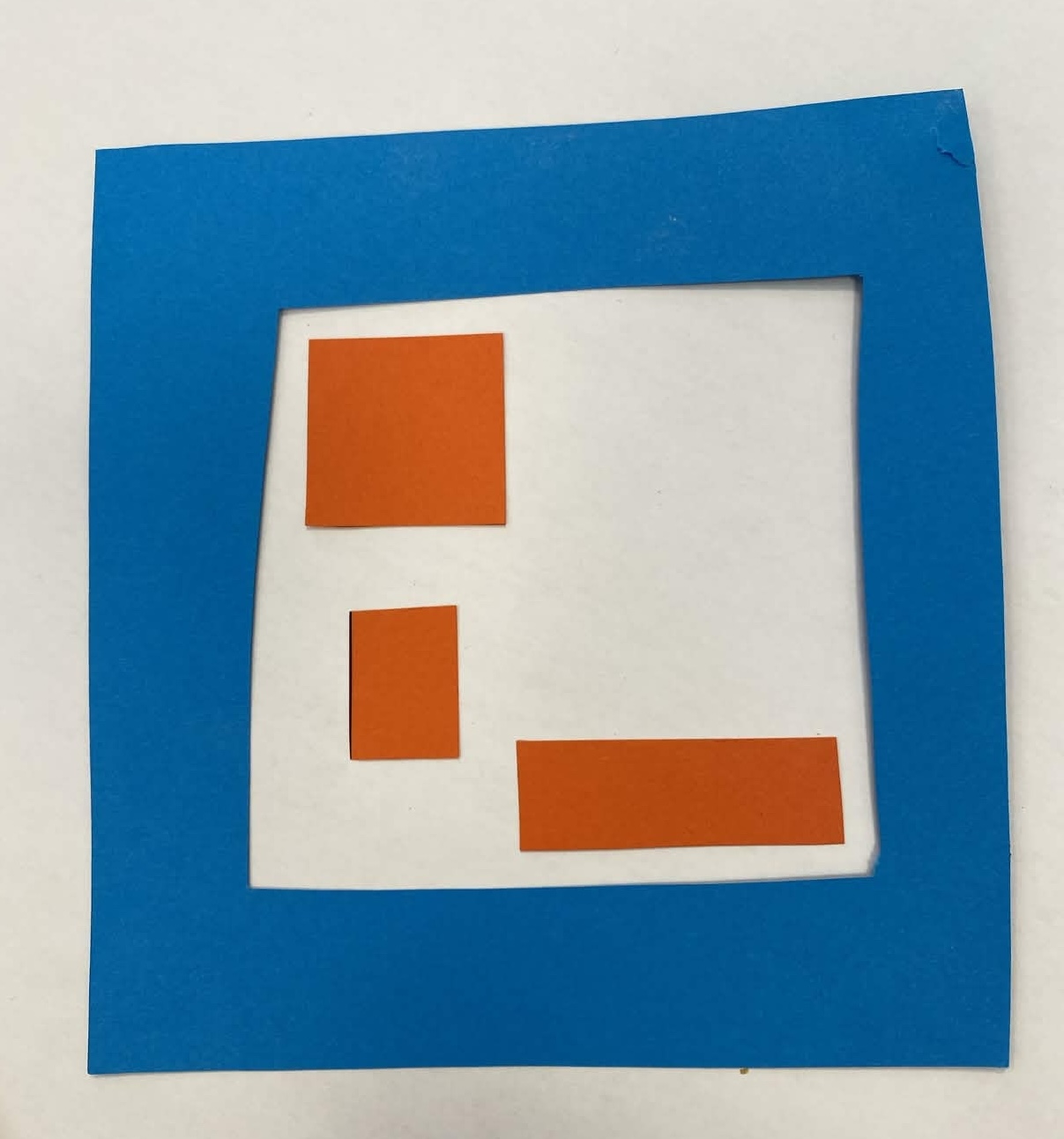
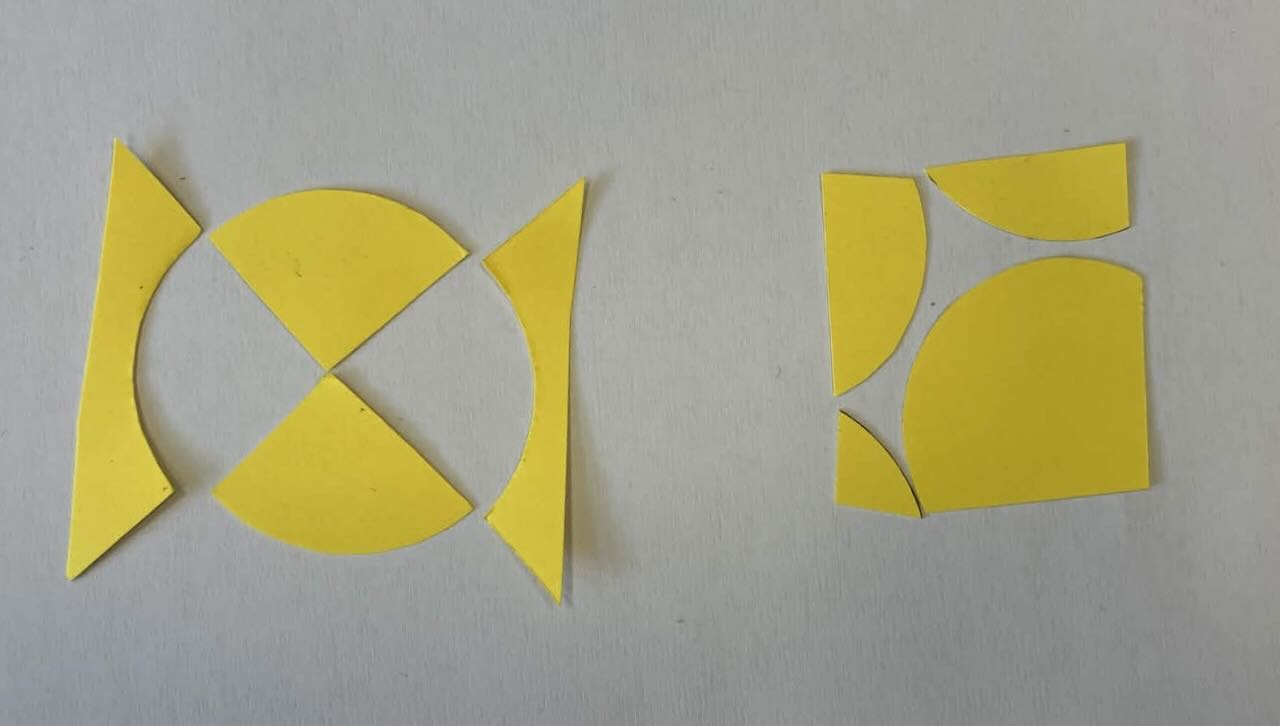
We talked about composition of images, and analyzed how our eye moves around various pictures of paintings or mathematical images (See worksheet). Then, we did some artistic dissection. What images can you compose by cutting up and rearranging the pieces of a square?
🔗 Link to file
Clay
Summary:
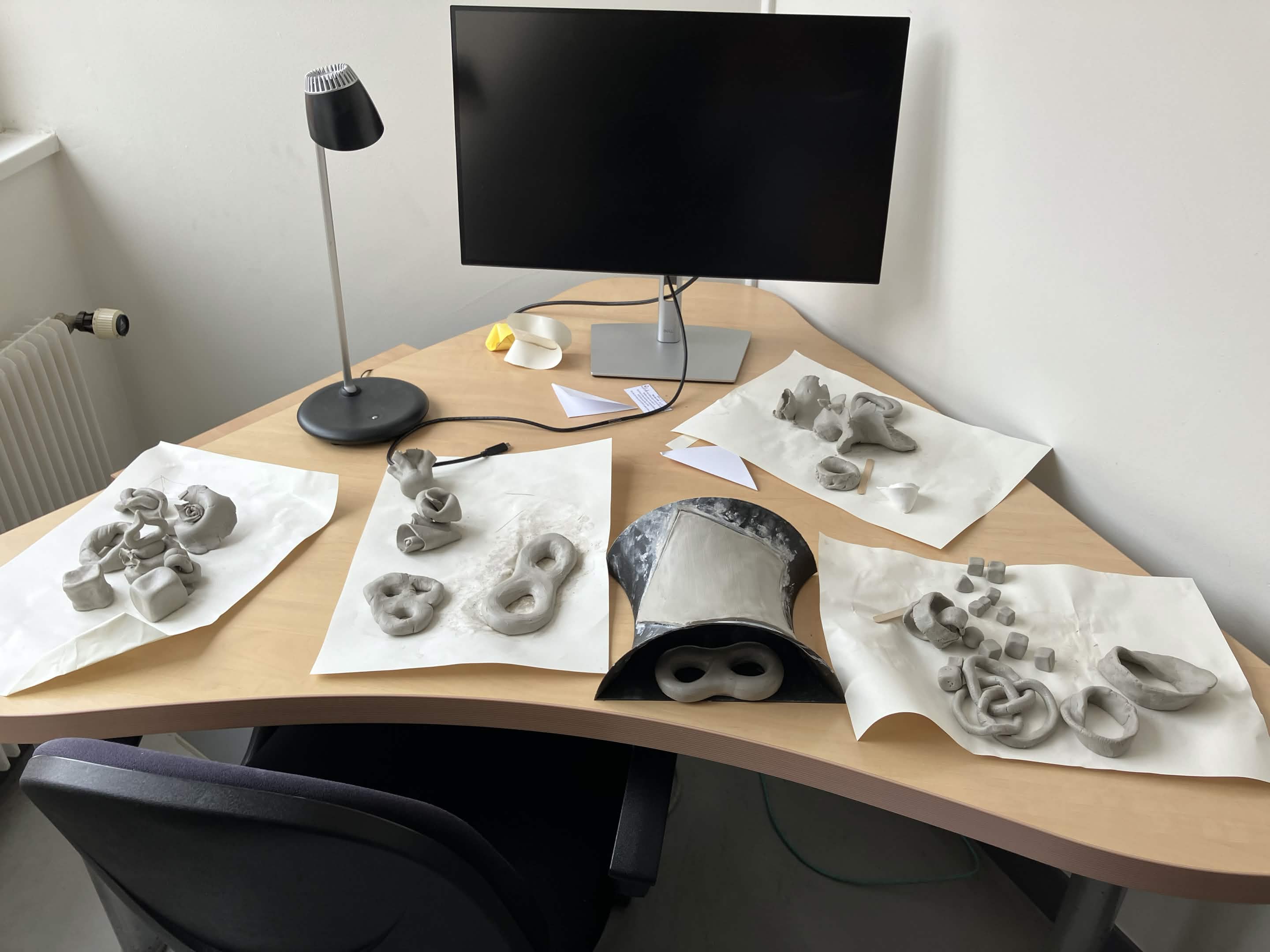
We played with clay and made silly shapes, led by Summer Haag. Aterwards, I talked about reflections and specular highlights, following my Torus talk
Shading
Summary:
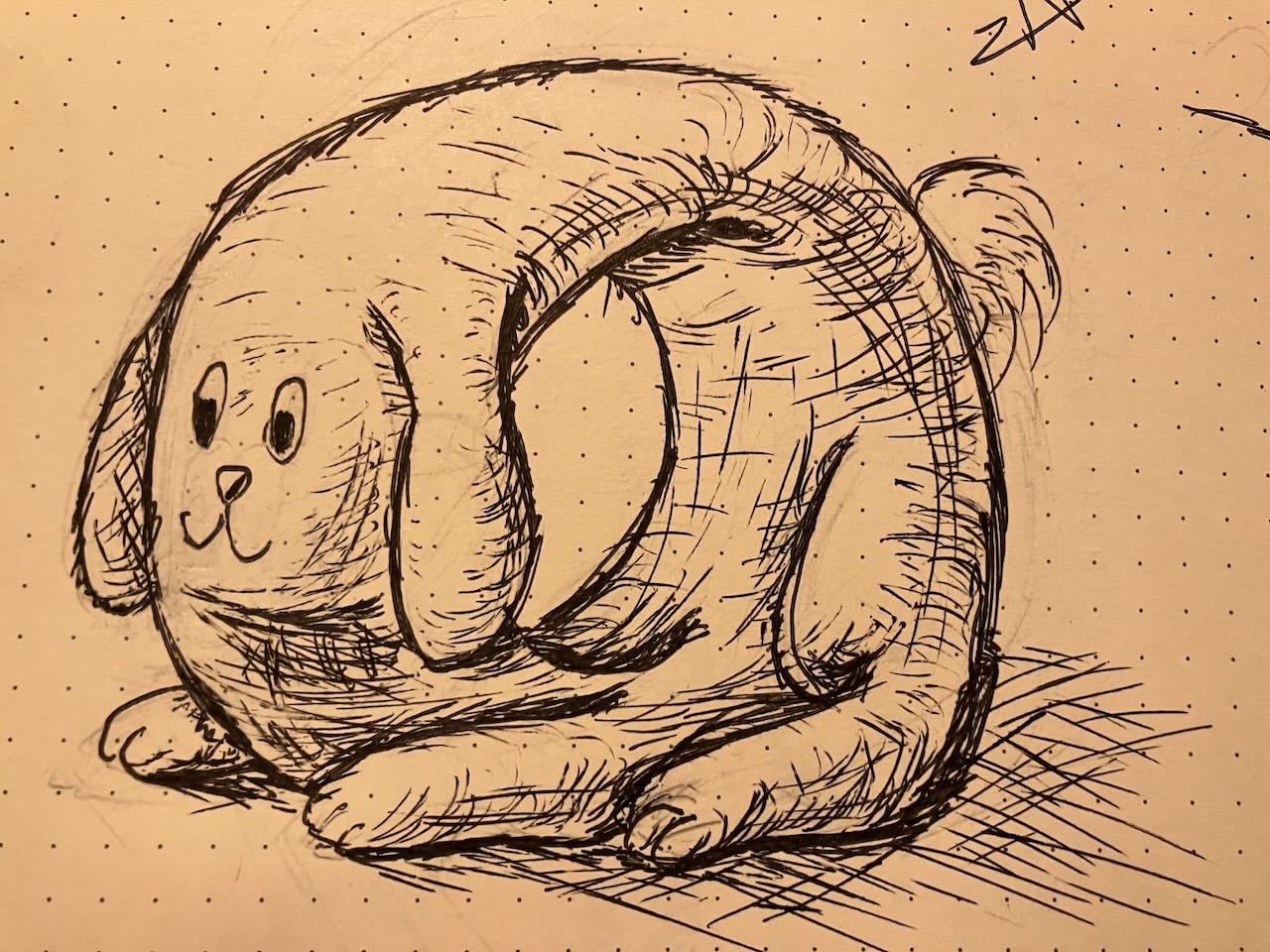
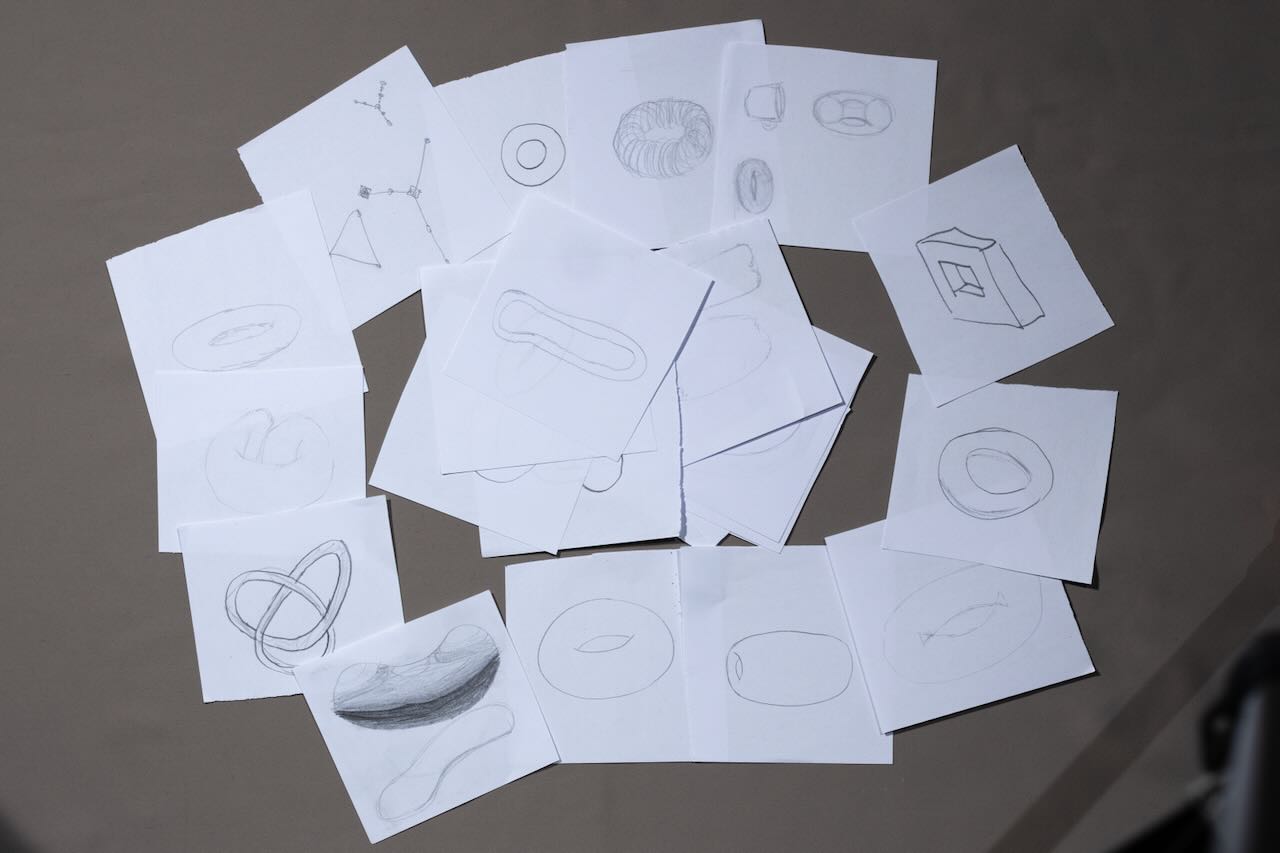
For the number theory conference, I ran a workshop on mathematical drawing. I introduced cusps and folds, and taught people about crosshatching. Afterwards, we drew topological critters.
Field trip
Summary:
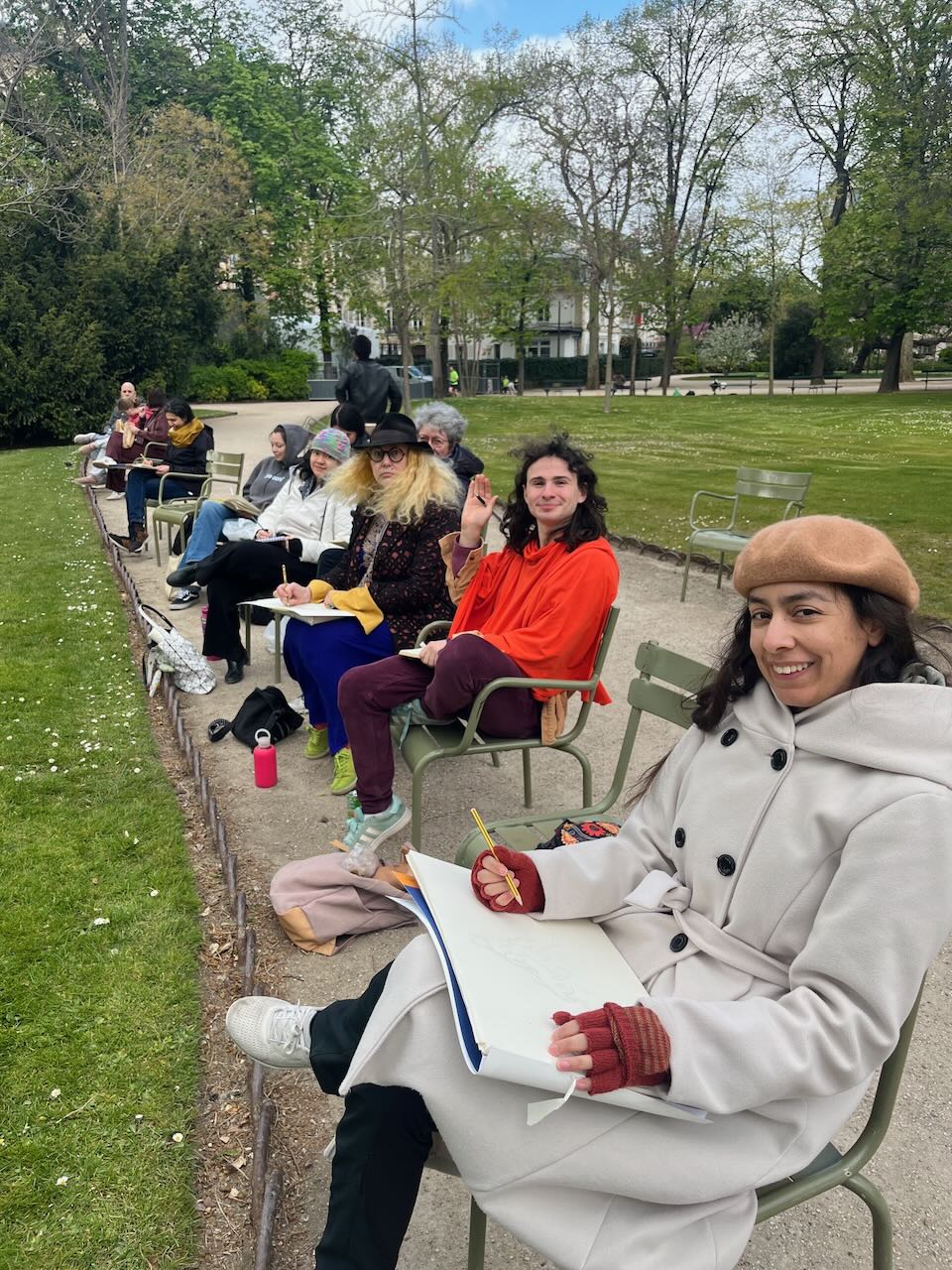
Field trip day! For the last day of drawing club, we went into Jardin du luxembourg and drew pictures of the statues. Picture credit Chaim Goodman-Strauss
Gallery
An Exquisite Topological Corpse
Each person draws a square, first drawing the lines, then filling with a soapy film. Togehter, they build an exquisitly topological surface. This piece was displayed at the Maison Poincare art show following the trimester at IHP. For more information, see the week on Seifert surfaces