Seifert surfaces
Summary:
How to draw a surface bounding a knot. In the worksheet, I explain an algorithm for producing and shading these surfaces. You can make them look like they are formed by paper (zero gaussian curvature), or by soap (negative gaussian curvature). We then all produced a small surface bounding a knot on a square of paper, and put them together for a huge surface!
🔗 Link to file
First, we did the exercise where you draw a single closed curve on a piece of paper, with only double crossings and no points of self-tangency. Then, shade alternate regions of the resulting figure (this is always possible, color by the pairity of the winding number!).
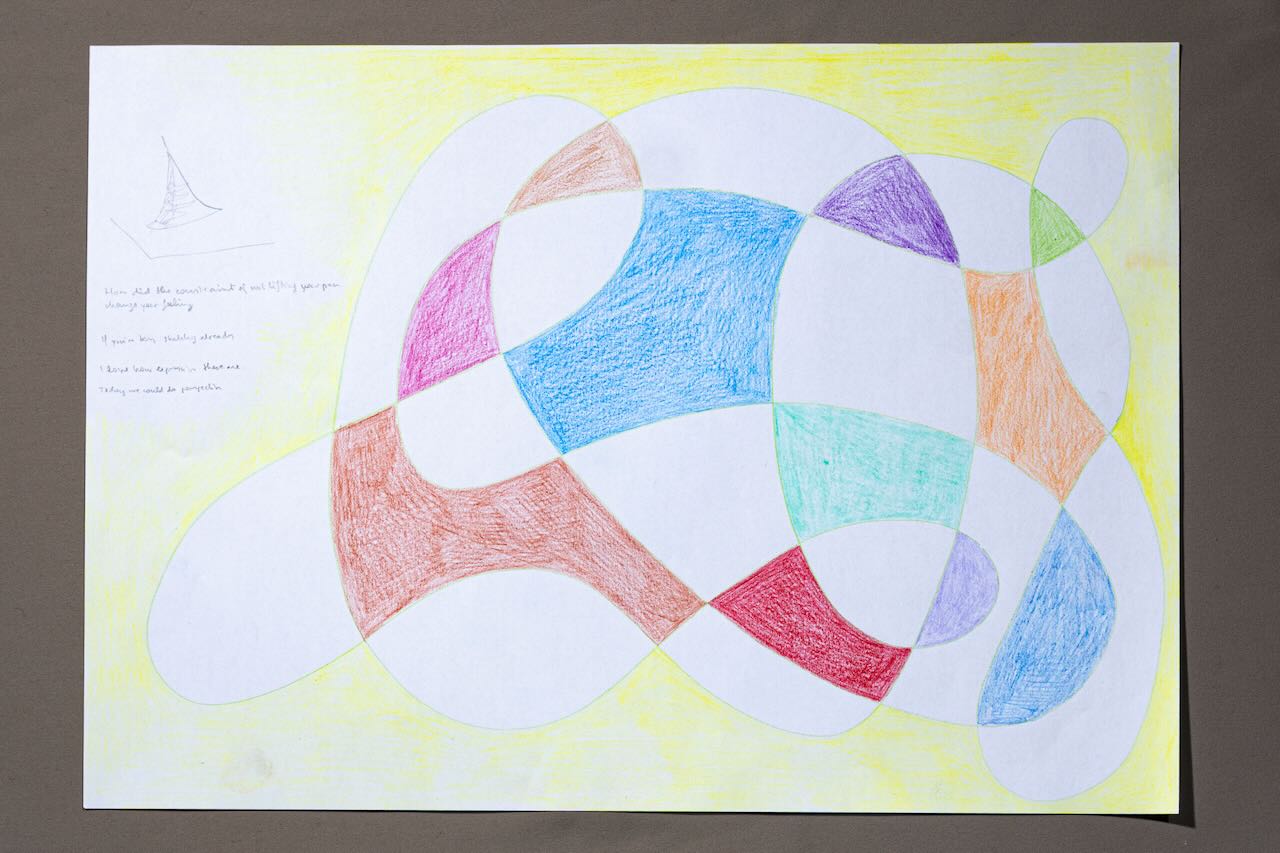
Unicursal curve
By samuel Lelievre (photo credit Edmund Harris)
Then, we experimented with giving this some depth, like it was cut out of tile. This is 2.5 D drawing, depth purely to distinguish front from back.
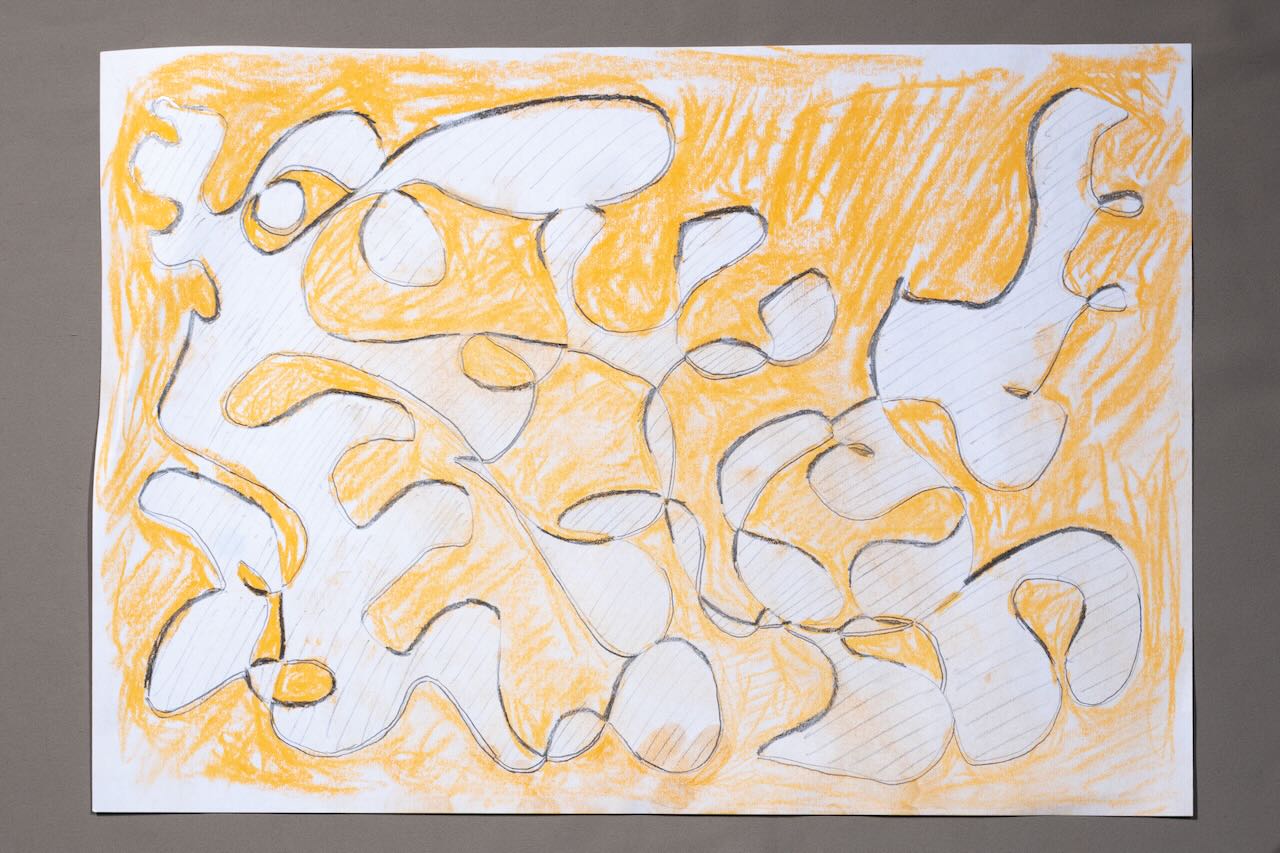
Unicursal Tile
By Rebecca Field (photo credit Edmund Harris)
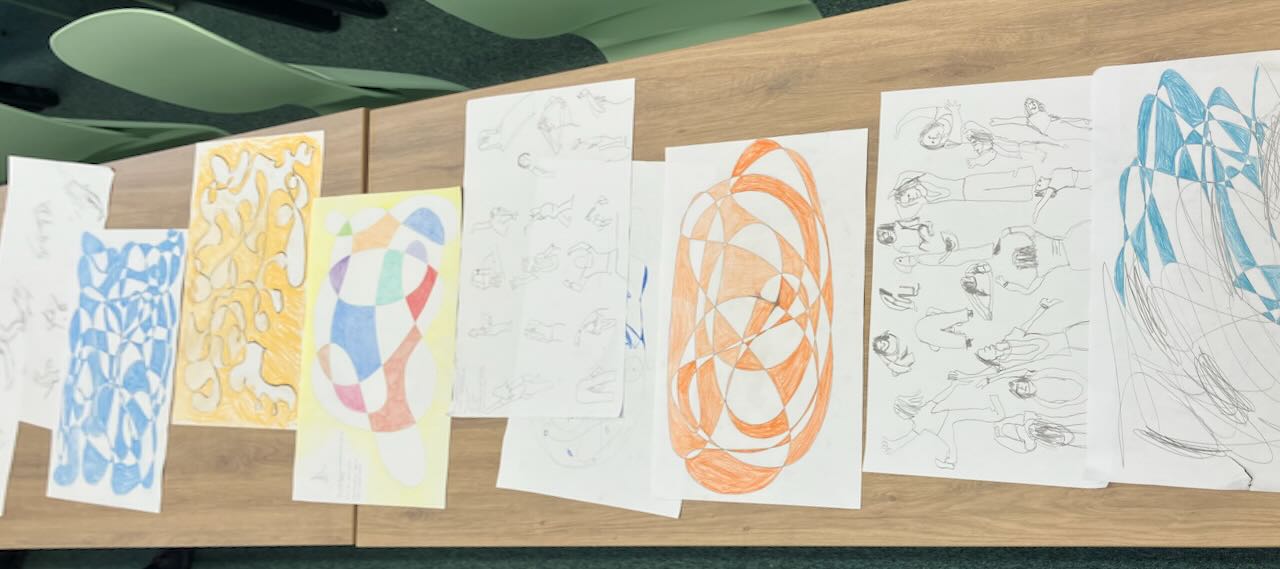
Sampling of people's drawings
Next, we learned to draw Seifert surfaces, following my guide in the worksheet. We then all together built a very complicated Seifert surface.
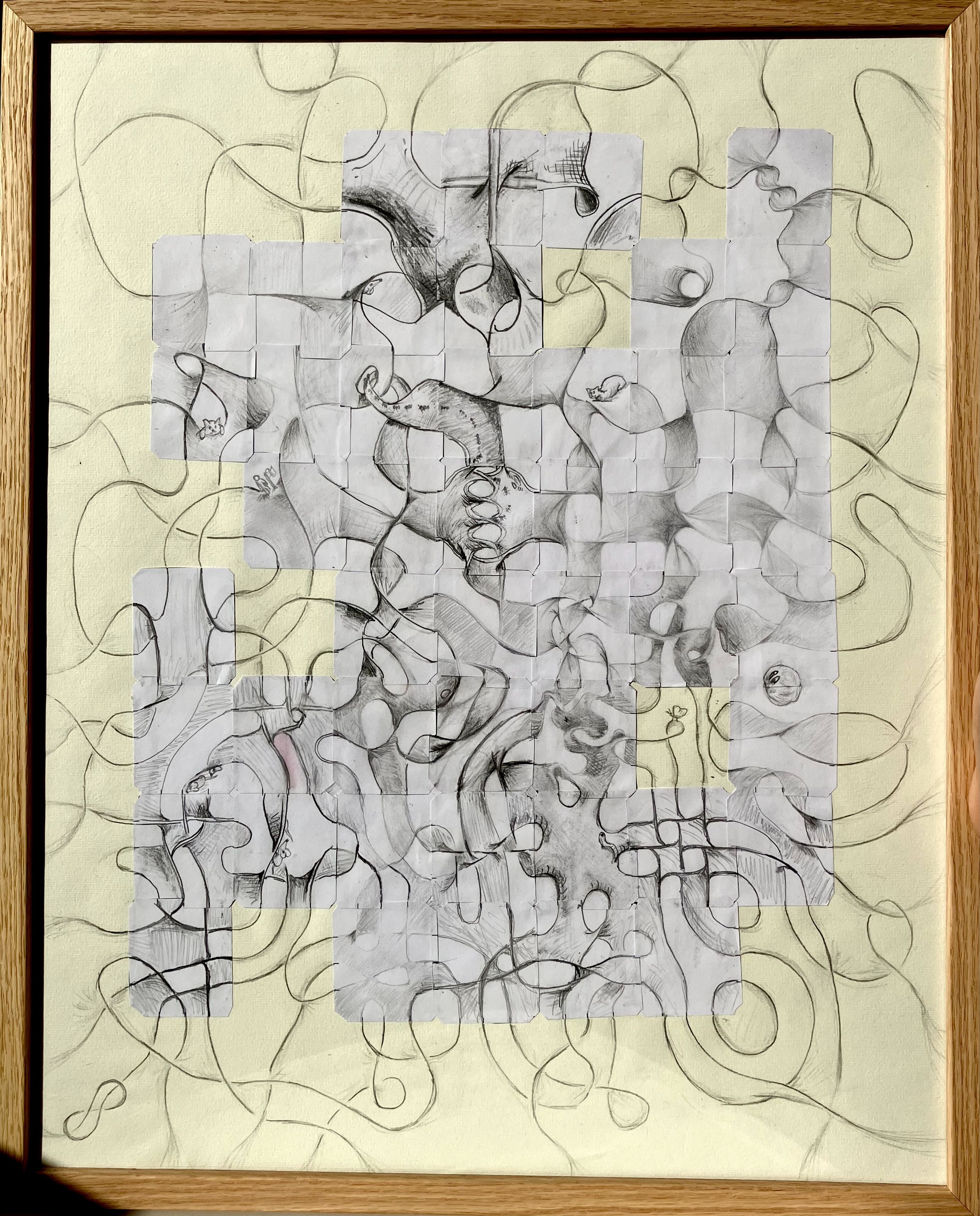
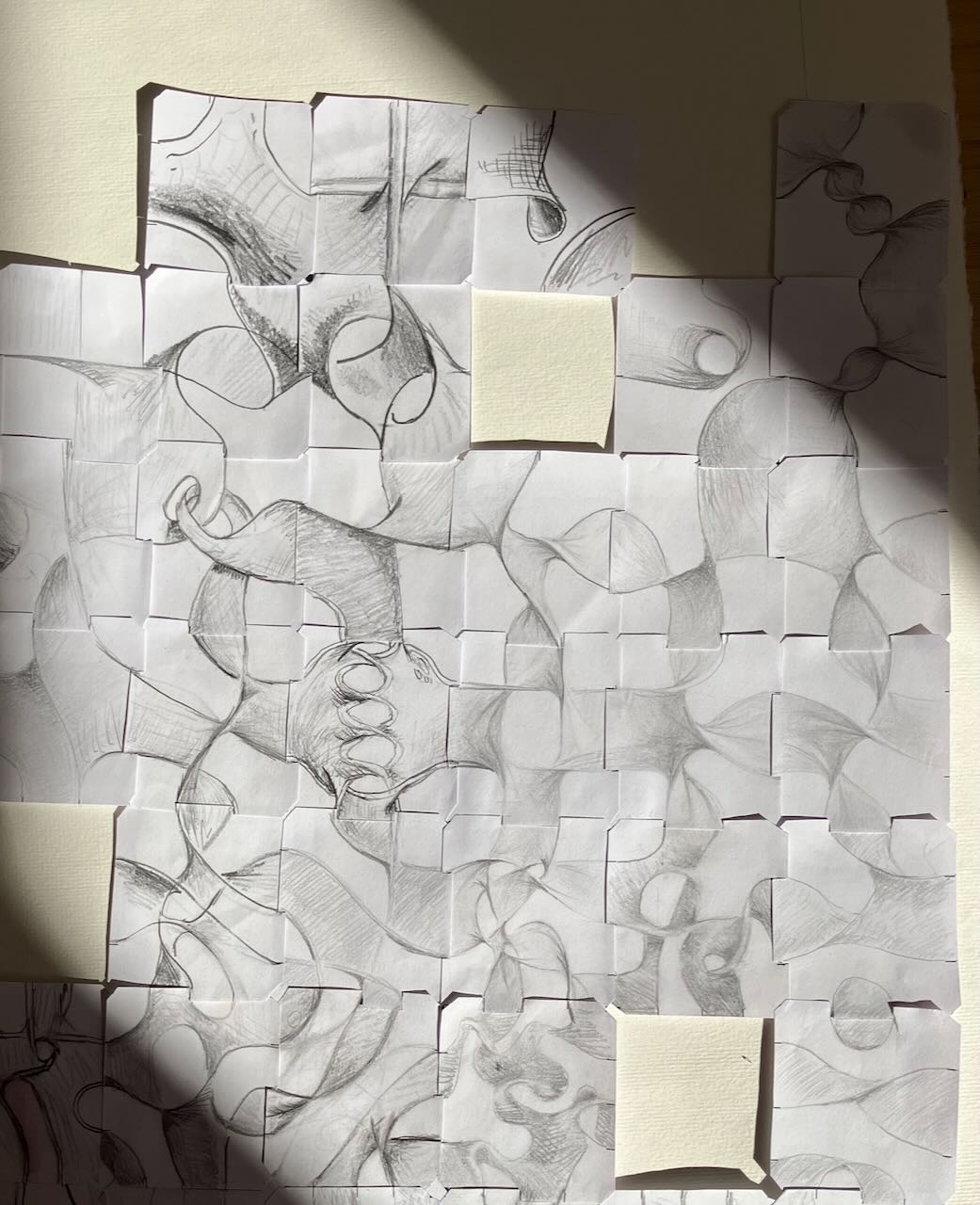
An exquisite topological corpse
This is an exquisite corpse. Each artist drew a section of the drawing, only knowing the very boundary of the others artwork. All together, we get something whole made of many different styles. This technique originated with the surrealists in Paris in the 1920s, less than a mile from Institute Henri Poincare.
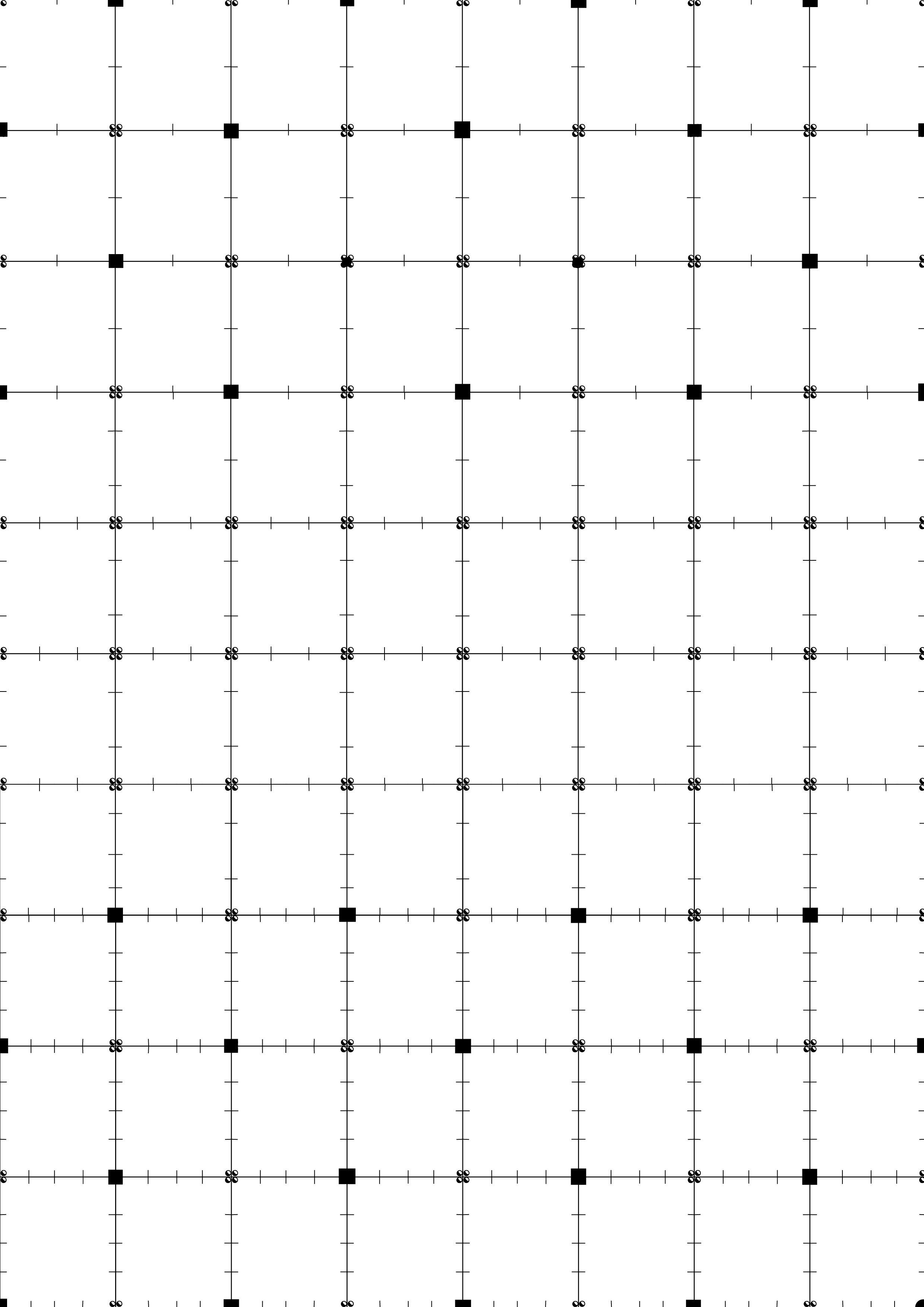
Each person was given a square that looks like this:
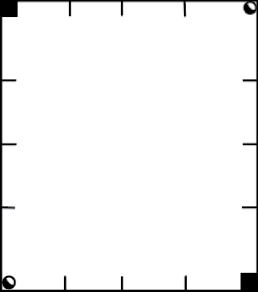
A single tile of the exquisite corpse
First, they connected the dots on all sides to form some knot. These could have crossings or not, any thing could happen on the inside. Then, they shaded the knots to form a surface. The surface had to exist in every other connected component of the complement of the knot diagram. The parts on the outside with the black squares must be part of the surface, and the part with the circles must be light. The artist then creates any seifert surface they like following these rules. Then, they shade with the light coming from the top right (the circles in the corner are meant to be a representation of a shaded sphere). If they wished, the artist added little critters living along the surface.
I planned out a network of these tiles, with more marks on bottom and less on top. It was planned so that each tile would merge with the next, with the surface in the right place and the shading from the right direction. All together, they piece together into an exquisite topological corpse. All in all, I got about half of the tiles I planned. The final piece is A3 size, when it was intended to be A2. I’m very happy with it.
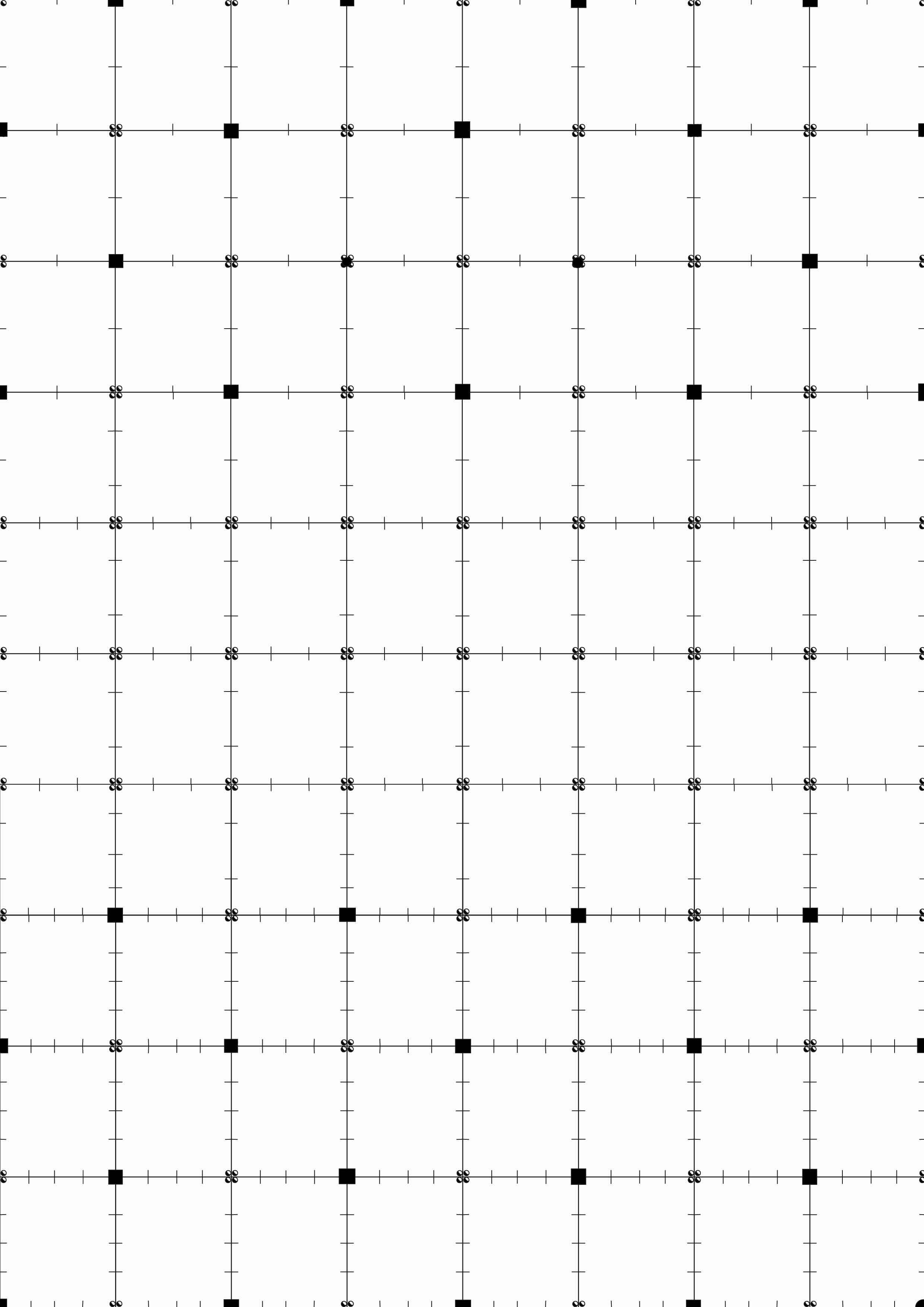
template for the exquisite corpse. Click here for full sized template