Code
a collection of interactive programs, many of which illustrate some math.Abelian polygon spaces
Summary:
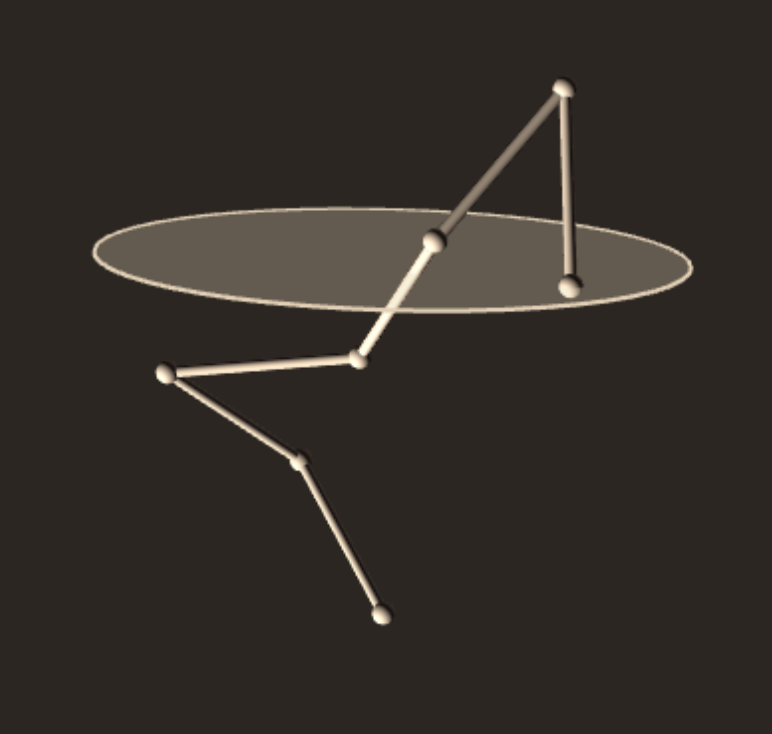
A collection of applets exploring the polygon and abelian polygon moduli spaces
Numerical Floer equations
Summary:
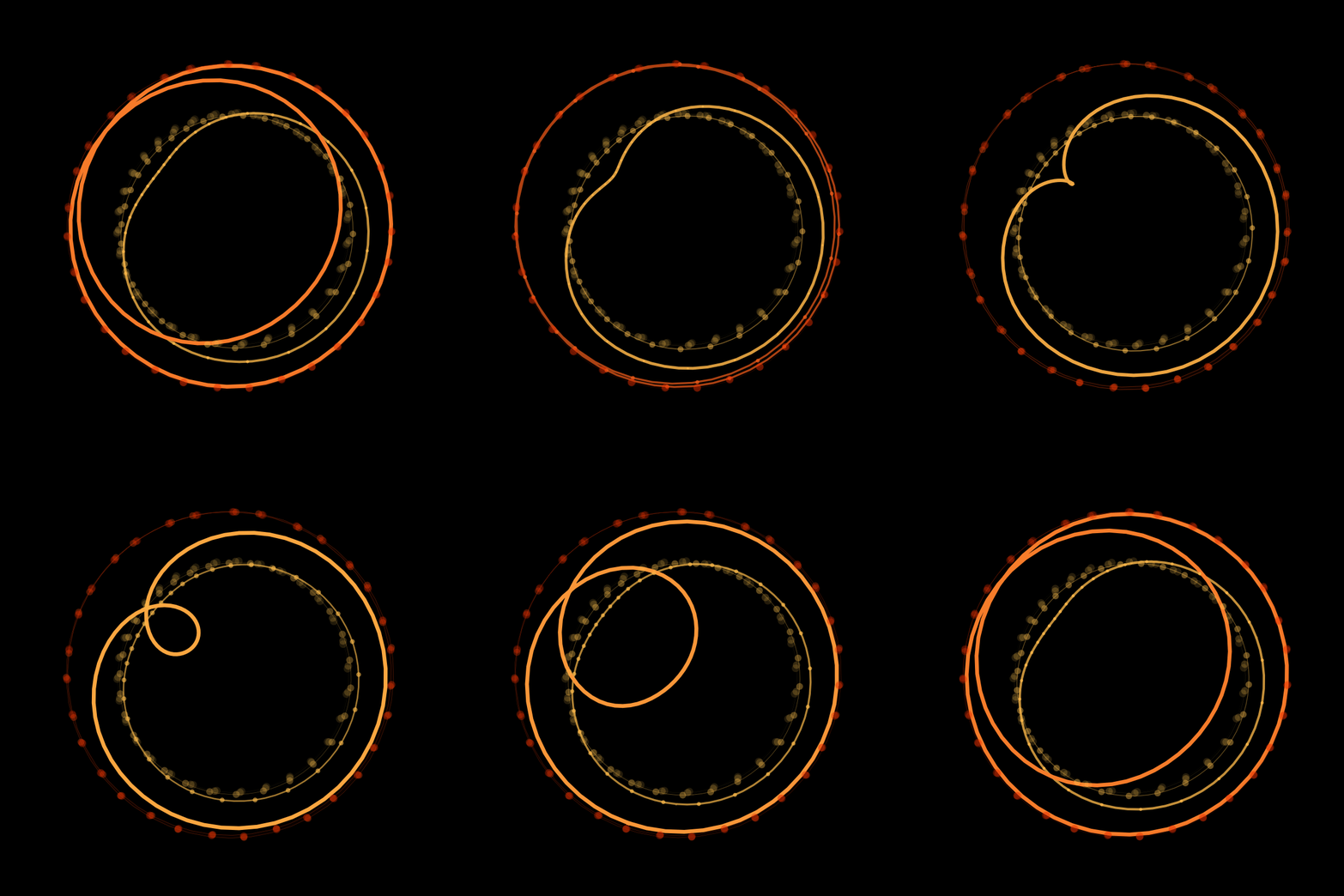
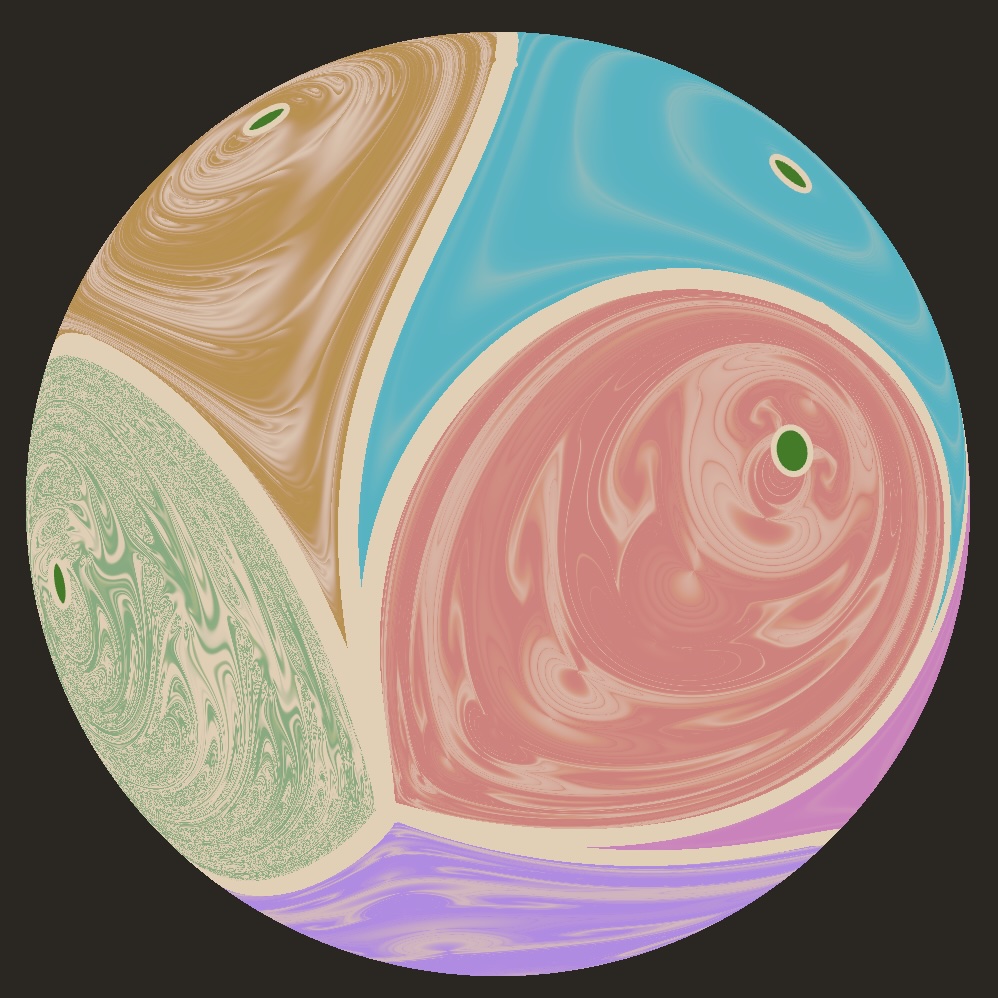
Solving Floer equations using Phyiscally informed neural networks
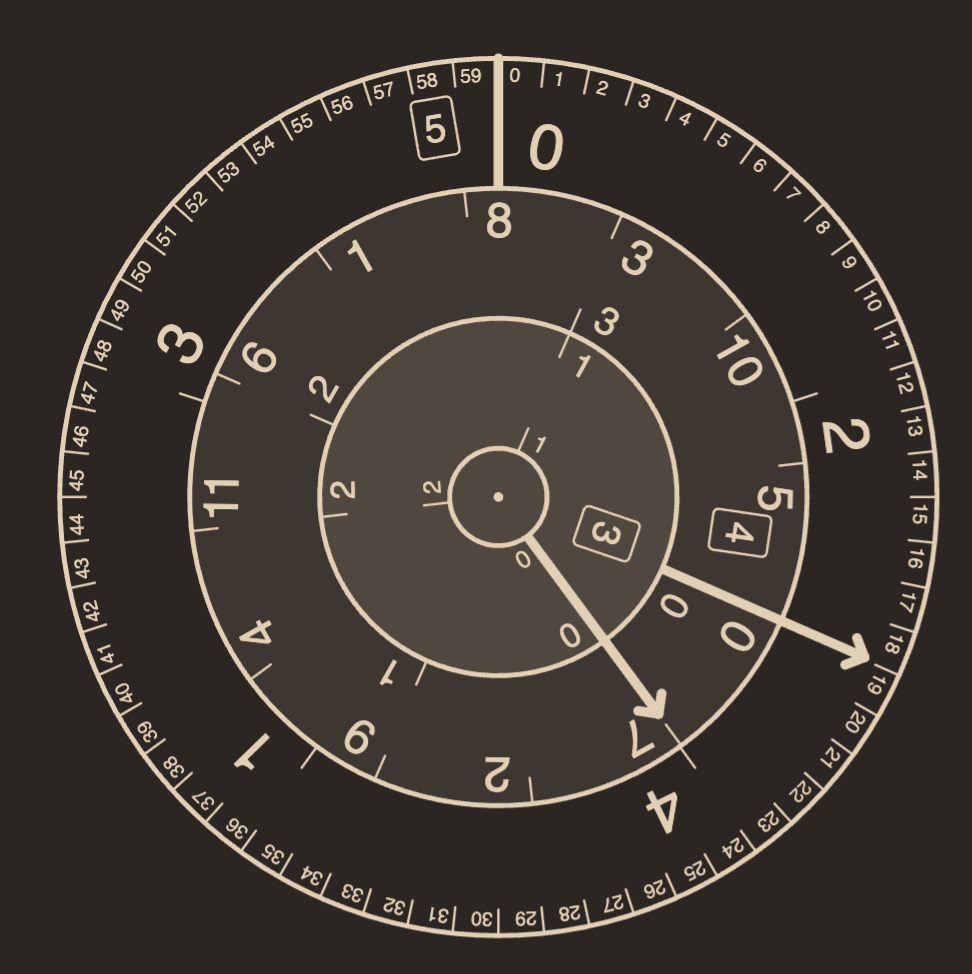
Sun's dial
Summary:
A mechanical mechanism for solving systems of modular equations, implementing Sunzi’s remainder theorem.
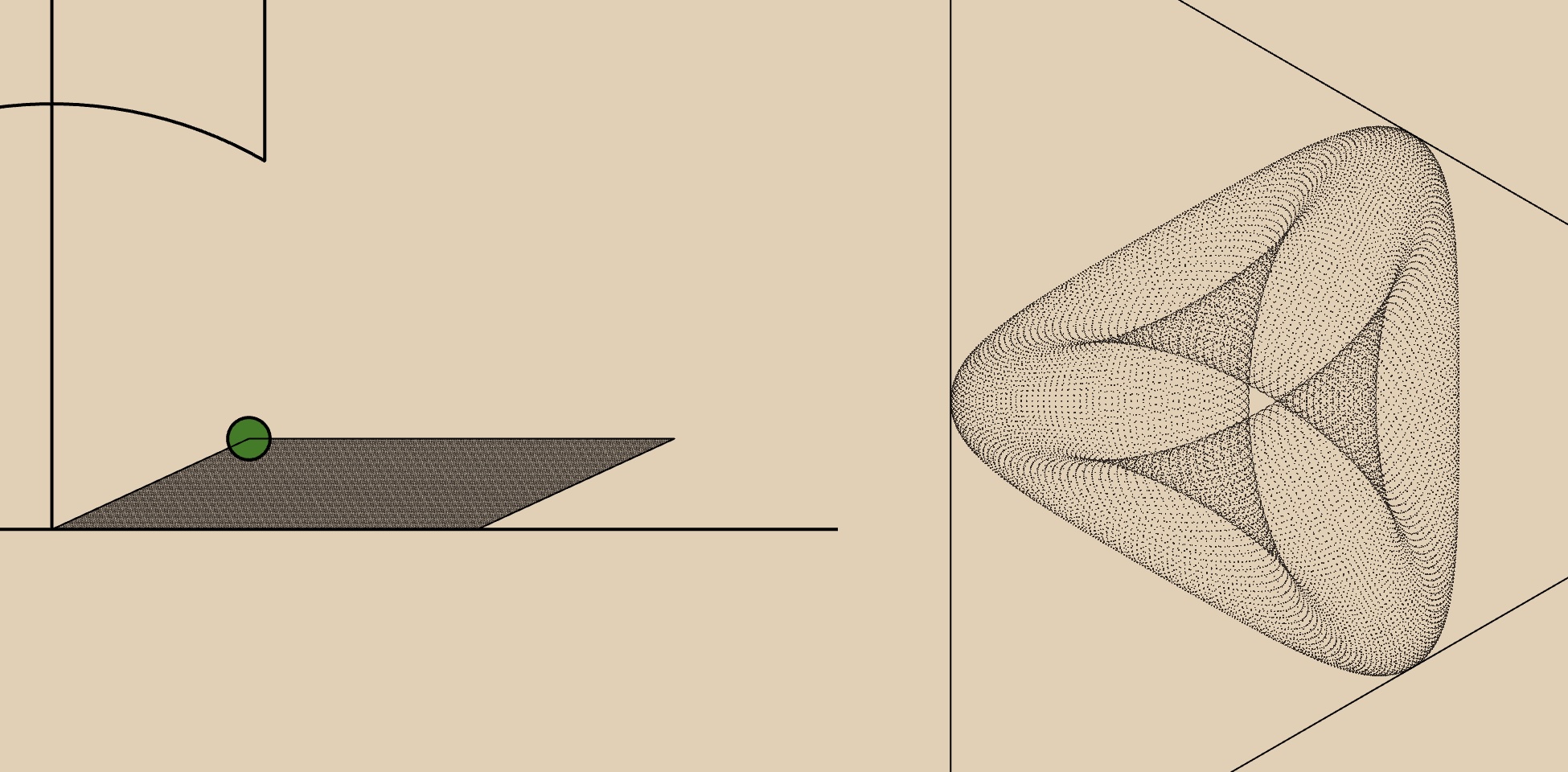
Torsion points of elliptic curves
Summary:
Visualizes torsion points of an elliptic curve, as they sit inside of $\mathbb{CP}^2$.
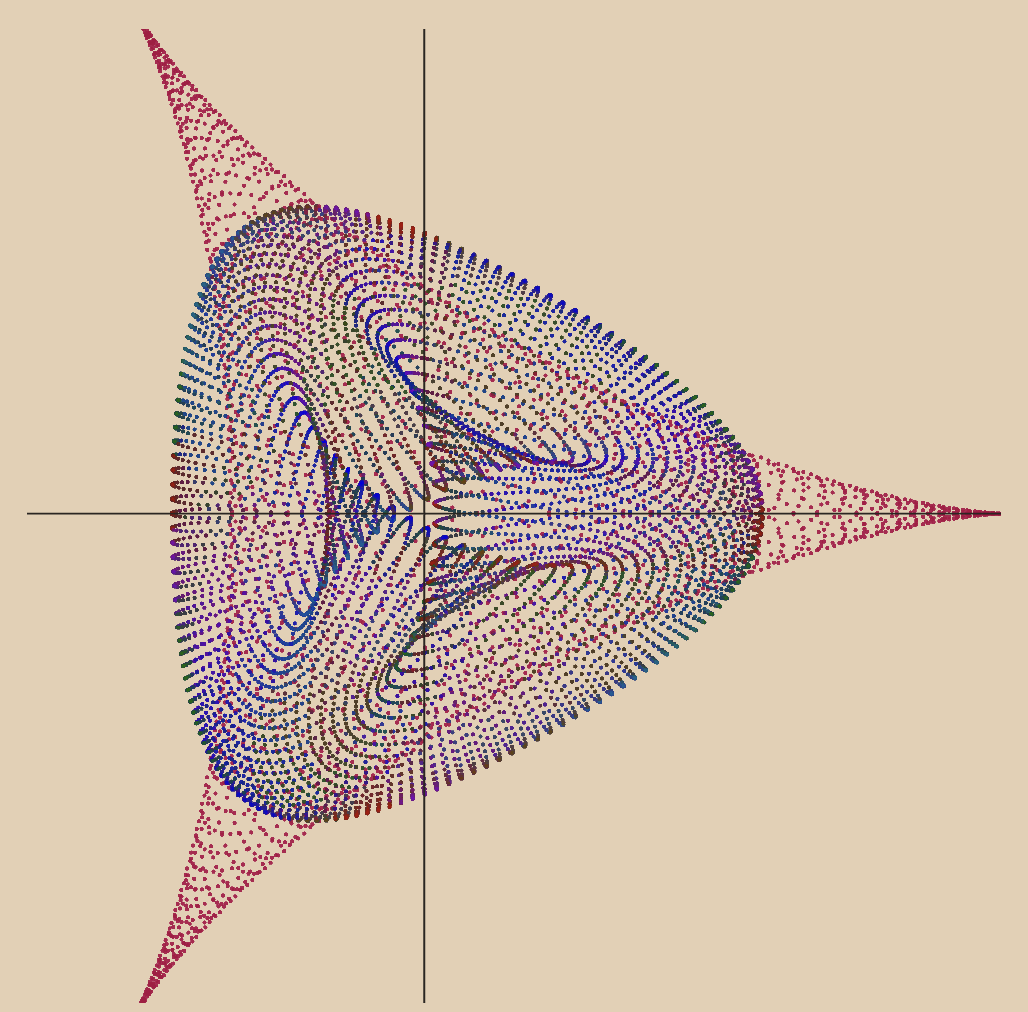
Gaussian periods
Summary:
Gaussian periods are particular families of sums of roots of unity. This applet visualizes the set of values of gaussian periods.
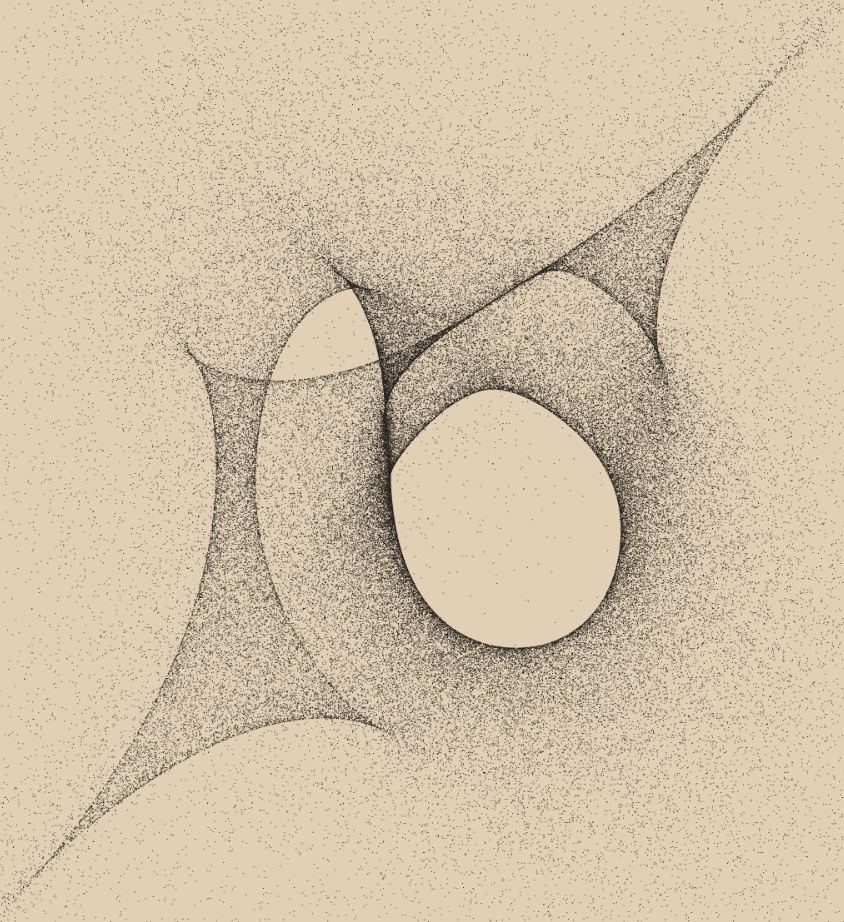
Shadows of curves in $\mathbb{CP}^2$
Summary:
Explore shadows of complex algebraic curves in the complex projective plane.
Fourier transform of polygons
Summary:
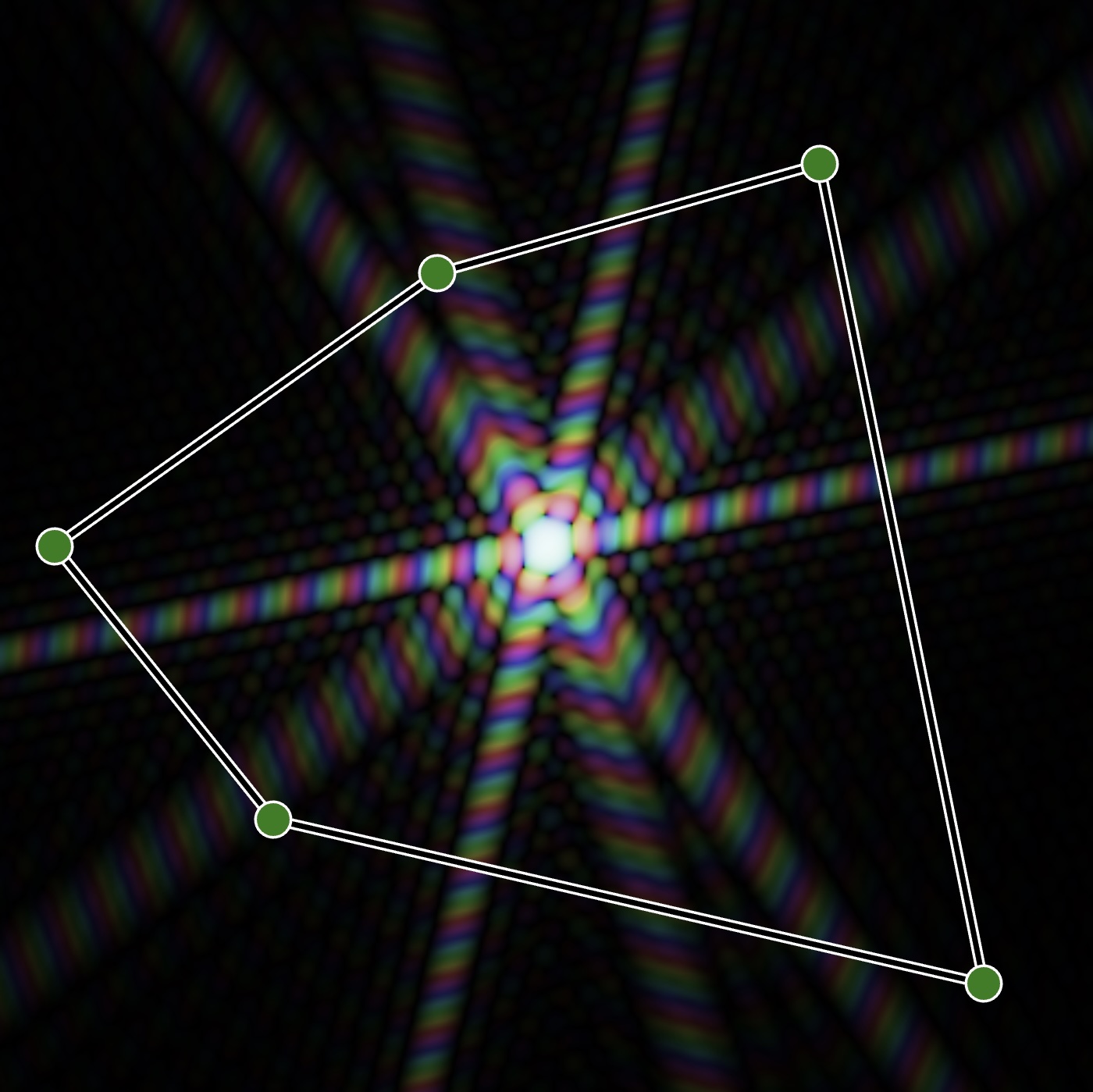
Fourier analysis is a powerful tool for the discrete geometry of polytopes. This interaction is born from a striking formula of Brion, an explicit expression of the Fourier transform of the indicator function of a polytope. First, we will see heuristics for the large scale structure of this Fourier transform, which forms a “starburst” (see below). Then we derive Brion’s formula, which describes the Fourier transform entirely from local data of the vertices. Finally, we will use Brion’s formula to derive Pick’s theorem, relating the volume of a lattice polygon to a count of lattice points inside the polygon.
Presented at:
- UC Berkeley student harmonic analysis, Fall 2025
🔗 Link to file
Uncertianty principles on Segal-Bargmann space
Summary:
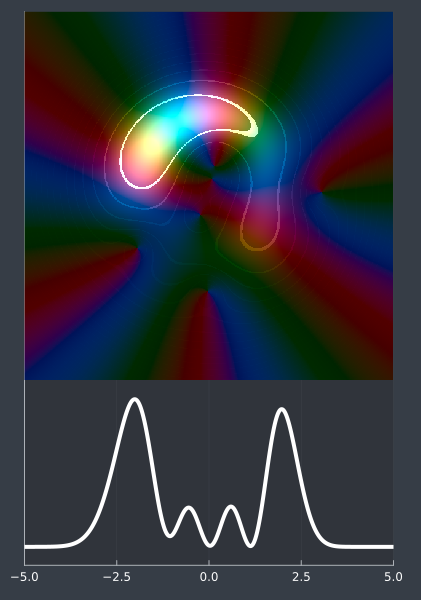
The Fourier transform can be localized to encode the component frequencies of a signal at a particular time. This defines a function on a two dimensional “phase space”, with one dimension time and the other frequency. I will introduce my favorite phase space representation, the Segal-Bargmann transform, which takes a function on $L^2(\mathbb{R})$ and outputs a holomorphic function on $\mathbb{C}$. We will see how the phase space representation geometrically encodes the spectral properties of the original function, and build a dictionary between these two function spaces. Then, we manifest the uncertainty principle, stating that a holomorphic function in phase space cannot be too localized. First we will discuss coherent states, which have the largest possible $L^\infty$ norm for a fixed $L^2$ norm - a “minimal uncertainty” function. Then, we will prove a recent result of Nicola and Tilli, proving that the $L^2$ concentration of a holomorphic function on a set is maximized by coherent states on a ball.
Presented at:
- UC Berkeley student harmonic analysis, Fall 2025
🔗 Link to file
The Biran decomposition
Summary:
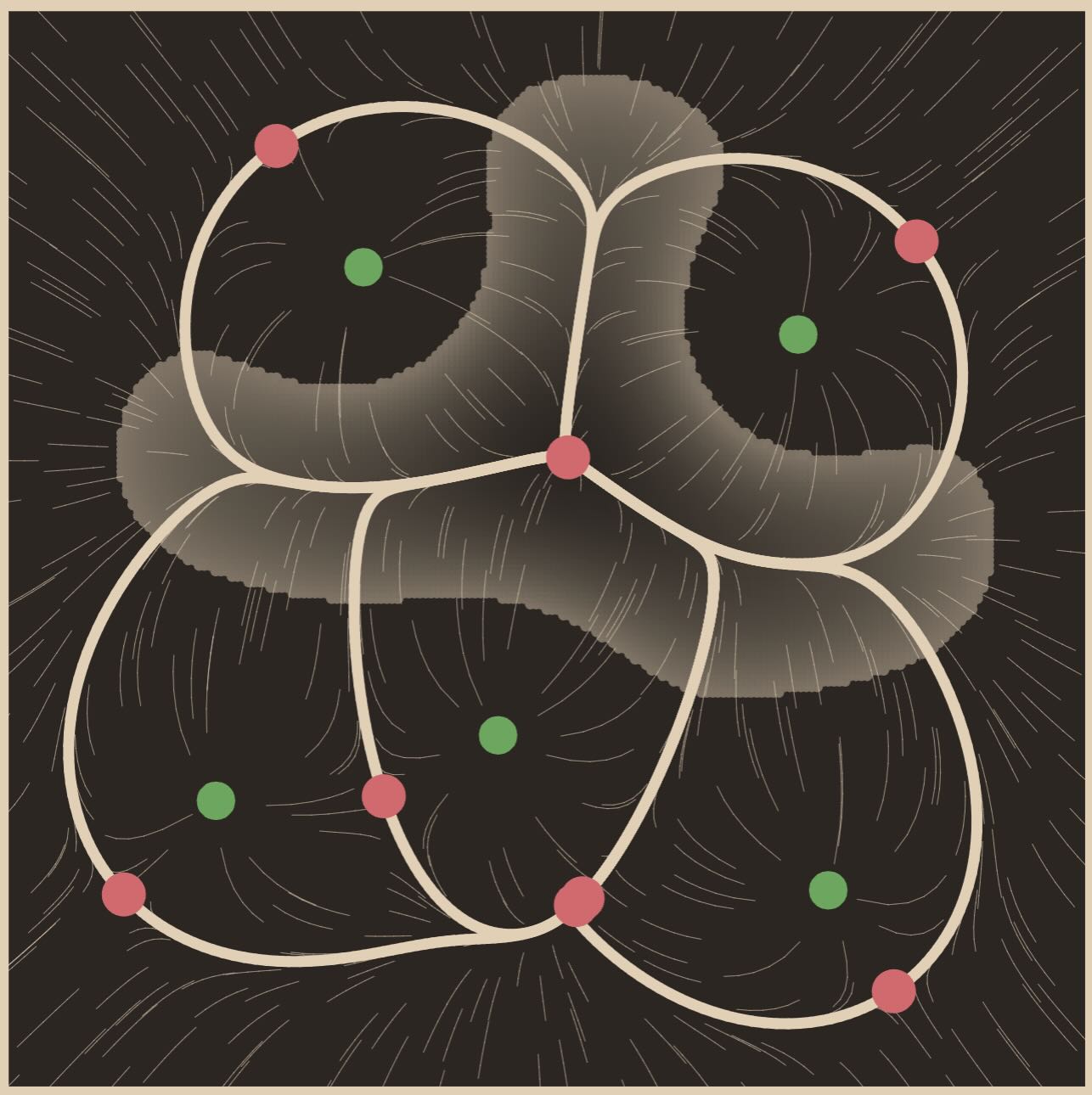
There is a clever way to split apart $\mathbb{C}$ into regions of equal area, using the morse theory of holomorphic functions. This is the first instantiation of a general procedure called the Biran decomposition. The symplectic structure of a Kahler manifold decomposes into two pieces: A symplectic disc bundle over a hyperplane section, and an isotropic skeleton. This Biran decomposition is a symplectic refinement of the Lefshetz hyperplane theorem. The proof uses the morse theory of the norm squared of a holomorphic section of the prequantum line bundle. We will use this to prove some lagrangian barrier phemonena. For example, every symplectic ball of radius $1/\sqrt{2}$ embedded in $\mathbb{C} \mathbb{P}^n$ interesects $\mathbb{R} \mathbb{P}^n$
Presented at:
- Student symplectic seminar
🔗 Link to file
Hyperbolic string art
Summary:
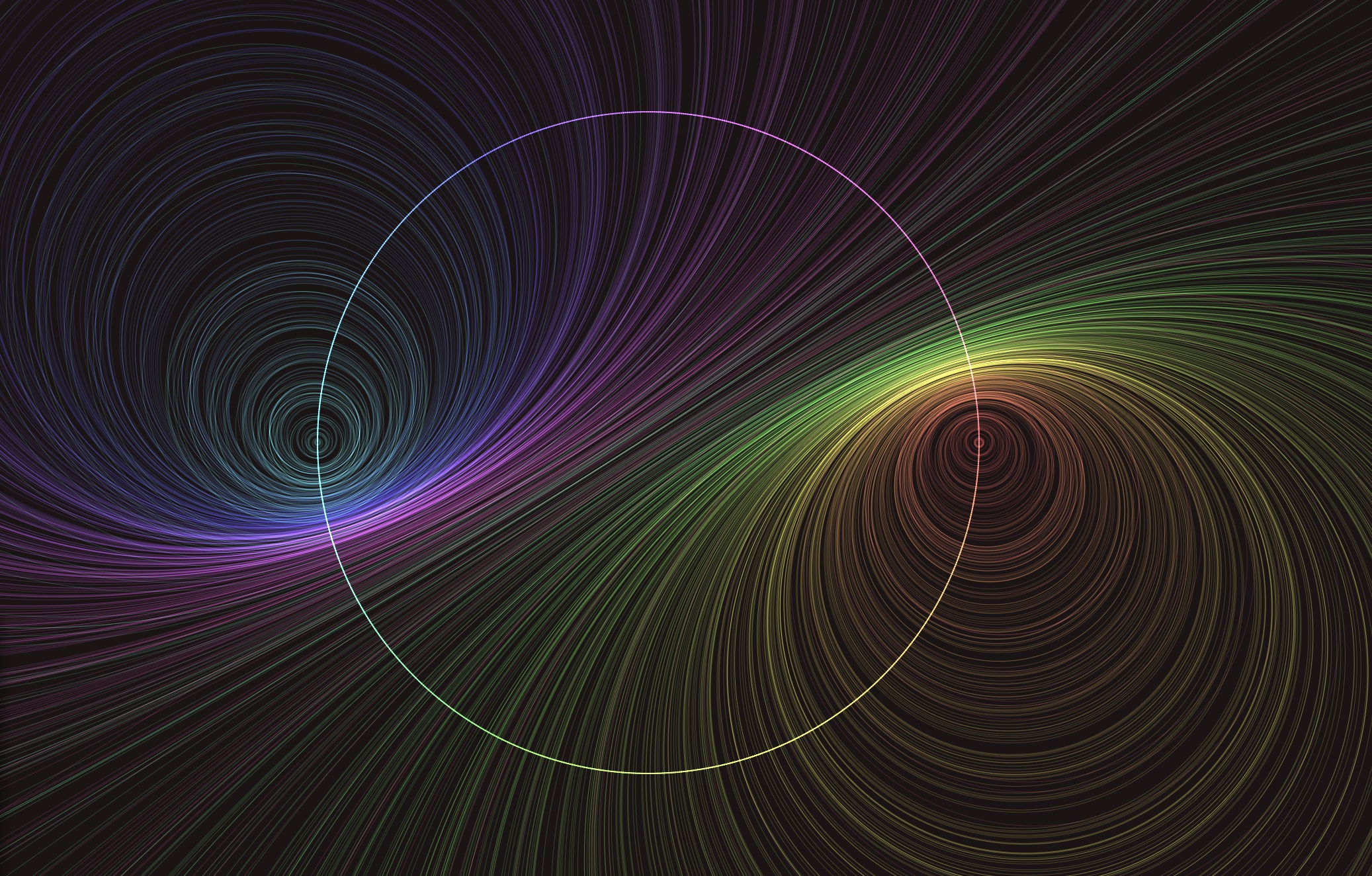
I close my eyes, but all I see are strings. Stretch a line across a circle according to simple mathematical rules, and you get elegant patterns often dubbed “string art”. For example, connect each angle $\theta$ to the angle $2 \theta$, and the heart-shaped cardiod emerges. This talk chronicles my fourier into hyperbolic string art, a recontextualization of string art imagining the circle as the boundary of the hyperbolic plane, and the straight lines as hyperbolic geodesics. The patterns arising from natural hyperbolic transforms reveal the symmetries and geometry of hyperbolic space. With hyperbolic string art, we navigate the hyperbolic plane watching only the horizon, and visualize the moduli space of closed hyperbolic surfaces.
Presented at:
- UC Berkerly many cheerful facts, Fall 2023
🔗 Link to file
Link to sketch
Toric geometry and harmonic oscillators
Summary:
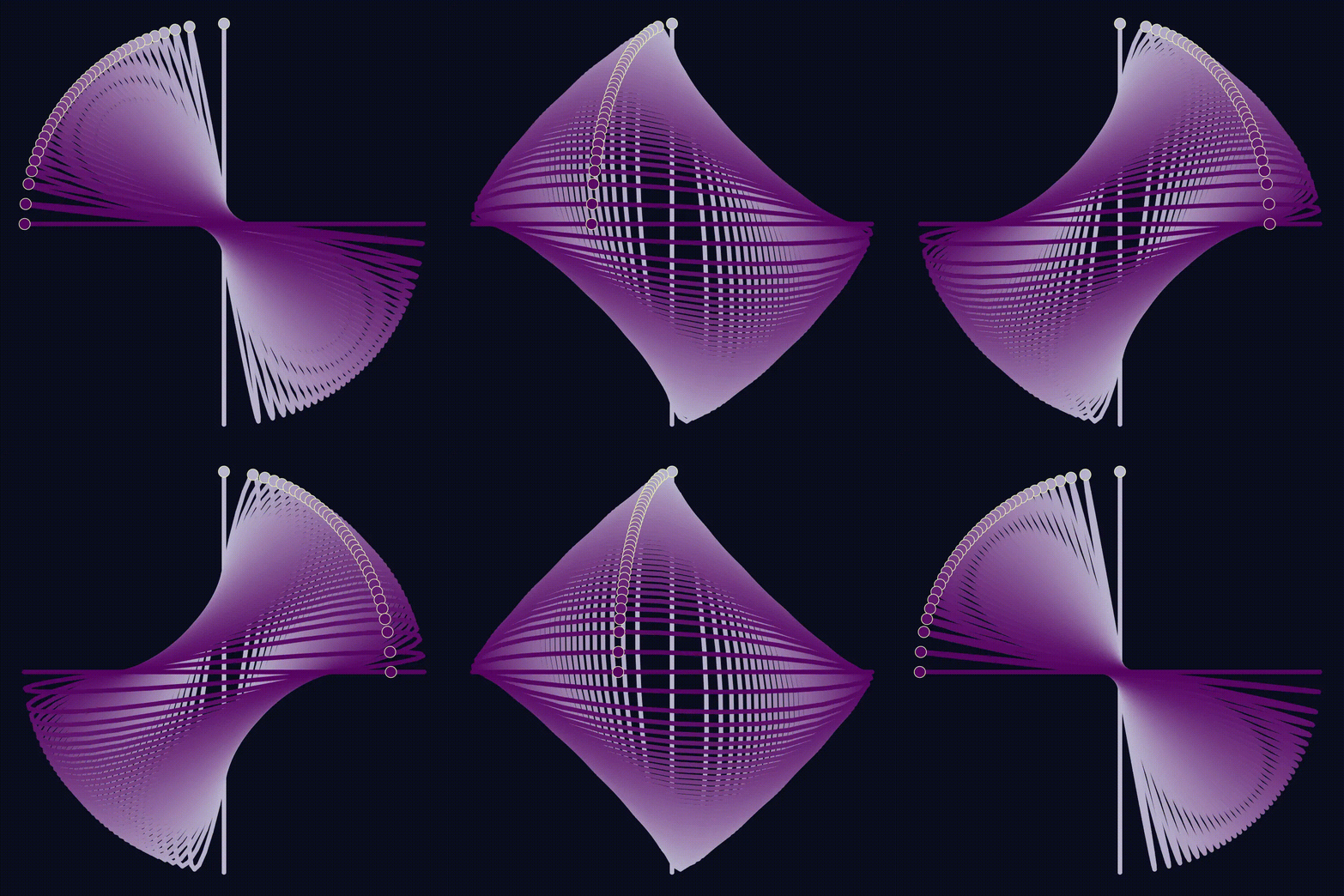
In Spring 2022, my final project for symplectic geometry class was a blog post on toric geometry, which incorperated processing sketches with math exposition. This, of course, blew way out of proportion. This is what I’ve started. First, I give a quick explination of symplectic geometry motivated by classical mechanics. Second, a description of toric manifolds through the lens of harmonic oscilators. In particular, I explain the Dual axis illusion as a consequence of toric geometry.
Link to sketch
Dynamics of random maps
Summary:
An illustration of dynamics of a random map from the plane to itself. It plots the trajectories of a few random points, showing where and how they accumulate. The map is periodically modulating perlin noise. As the map changes, you can see all sorts of bifurcations and dynamic effects. Here are some more examples, and a little more context
Link to sketch
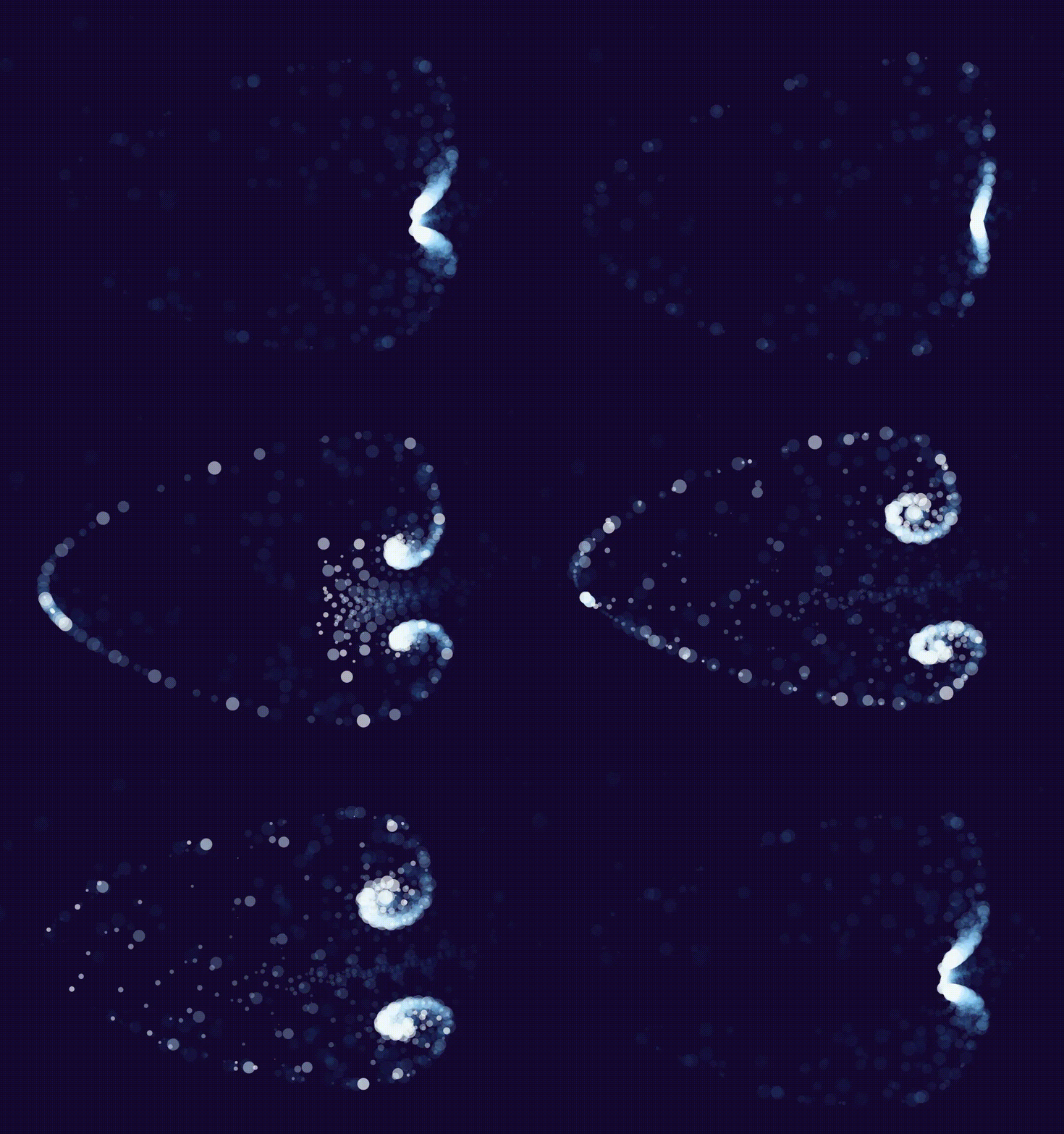
Hoops
Summary:
Just some fun little blobs, from when I first started to mess around with creative coding. I suggest looking thru the presets, some are pretty fun.
Link to sketch
(almost) Kam tori
Summary:
A failed attempt to find KAM tori, that still yeilded a neat result. Click the title for a brief description of what I was looking for (KAM tori), and what I got.
Link to sketch