Normal cloth
Summary:
A fabric made of normal vectors. Stretch it across a surface, and see the normal vectors.
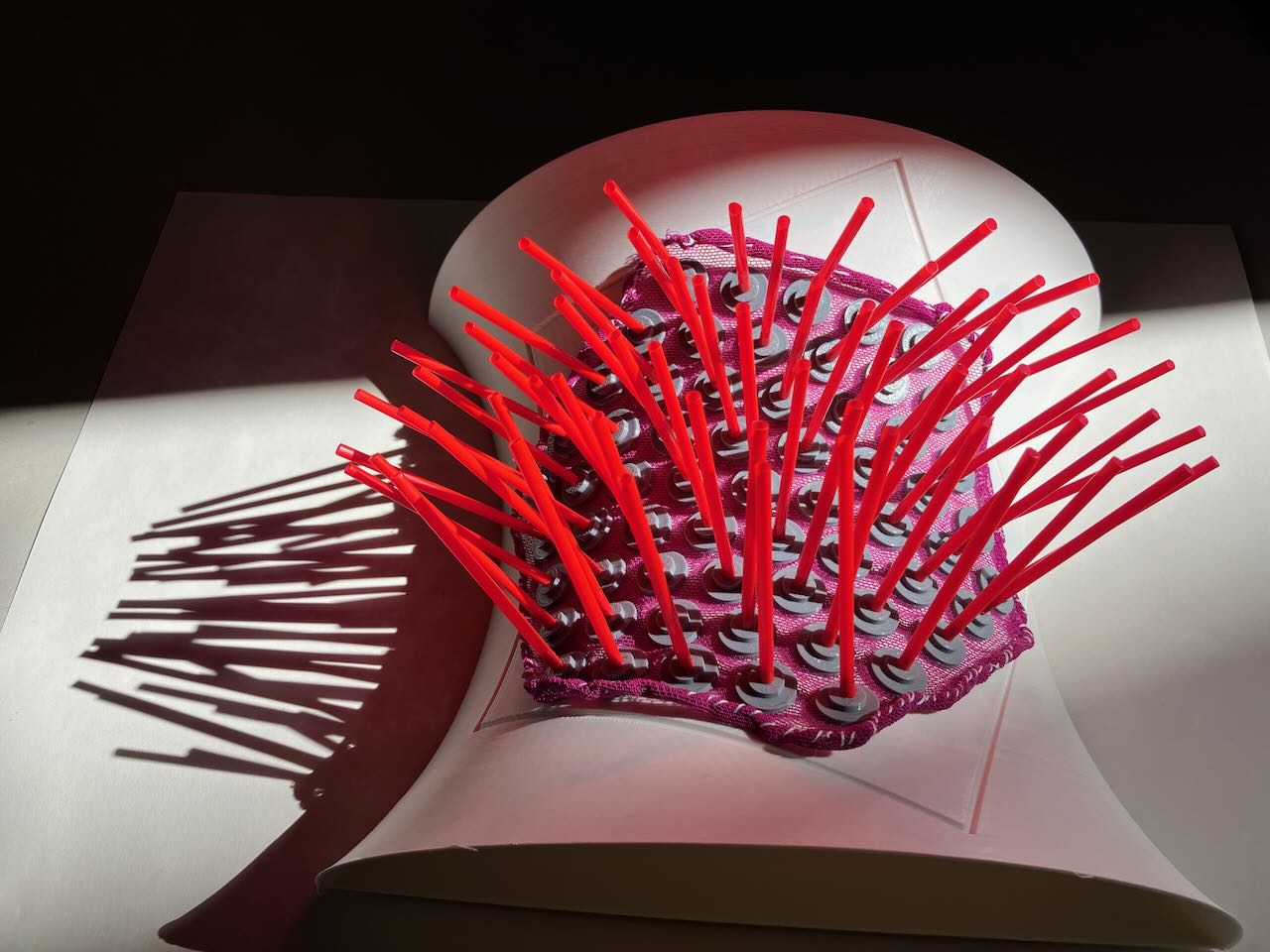
Born from conversations with Henry Segerman and Sabetta Matsumoto.
I’ve long wanted a cloth with normal vectors sticking out, so I could visualize normal vectors of surfaces. At long last, here it is!
Normals of a constant negative curvature surface
Here it is in motion. It would make such punk clothes.
Normals in motion. Video credit Dina Buric
The normals amplify any motion of your surface.
blub blub 🐟 I'm very normal

Like all the best math, it makes a great hat.
Math
You can see a lot of math with the normal cloth. Let’s check the normal vectors of a plane:
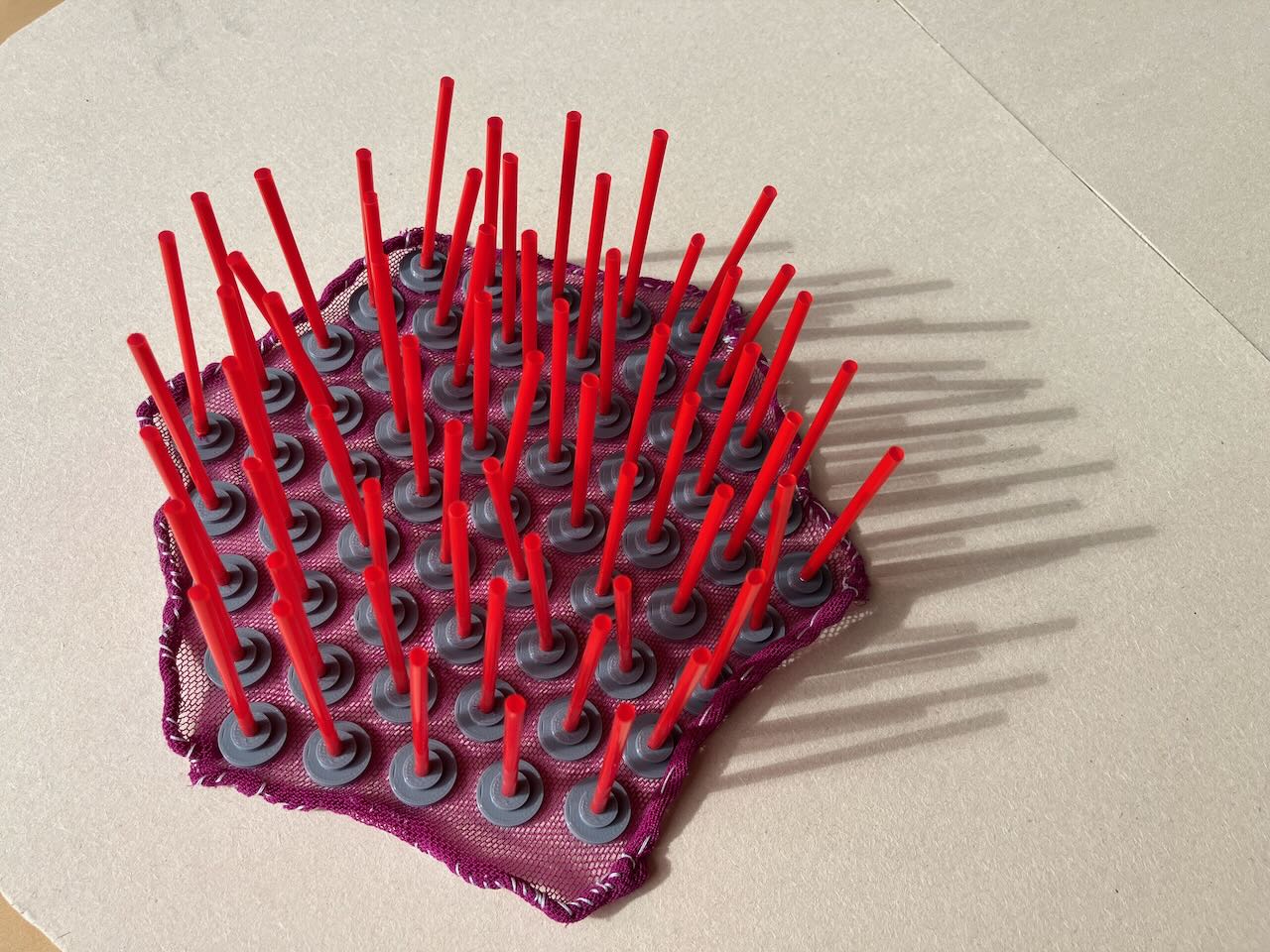
Normal vectors of a plane
Like we expected, they’re all pointing the same direction! Well, kinda. The straws are a little bendy, so there’s like 5 degree random variation in each. It looks like a bump map, a trick that 3D artists use to make surfaces seem bumpy. I’d like a version with less variation, but I don’t know how to make it. When the surface isn’t so flat, the deviation from the platonic realm isn’t so obvious. Now let’s put it on the hyperbolic plane!
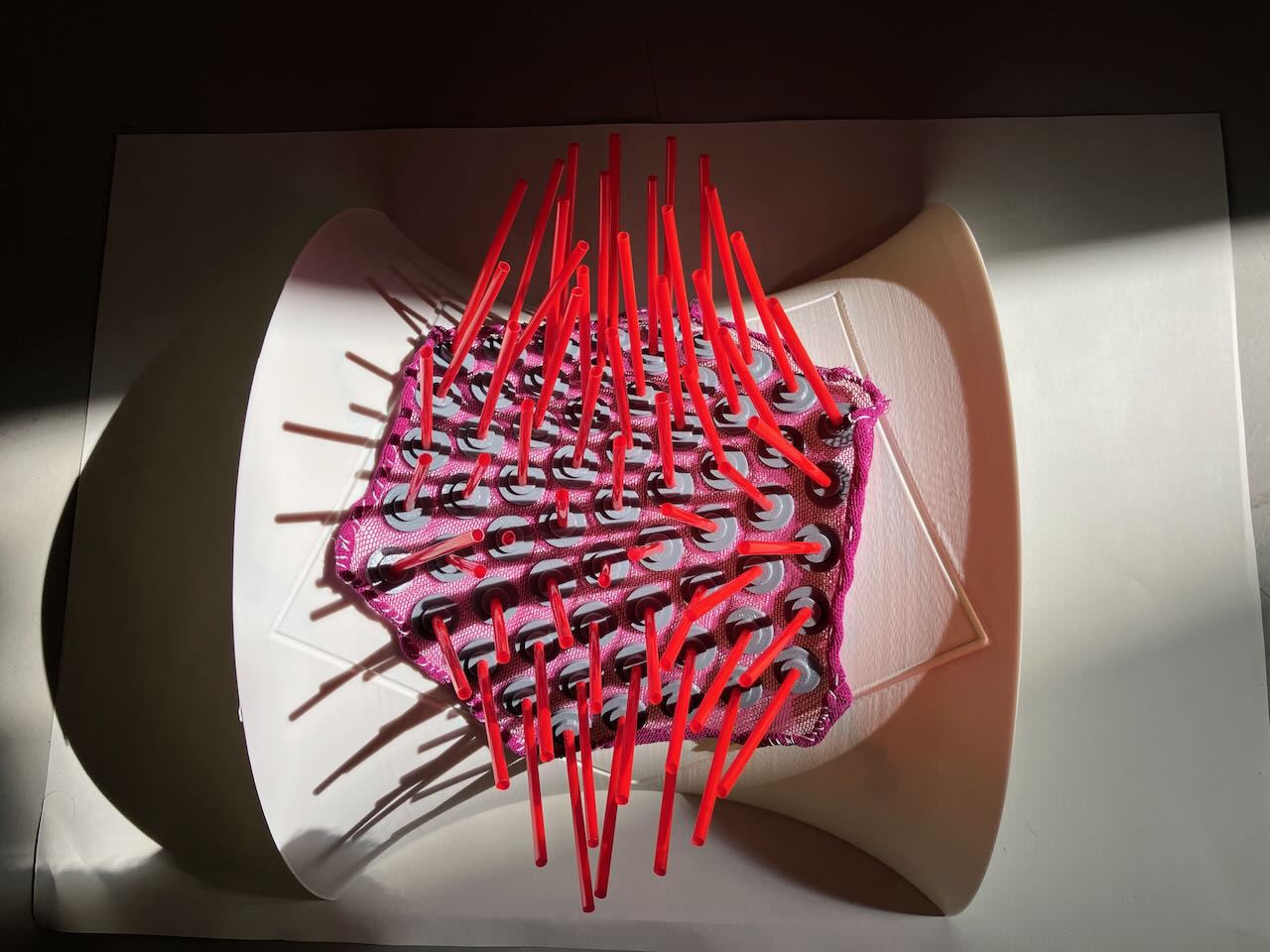
Normal vectors of a saddle
This is shot from from the top down This picture looks like a vector field in the plane, with a zero at the center of the image where the normal is pointing towards us. The linear approximation to this vector field at zero is given by a matrix, which is the second fundamental form. And we can see it with the normals! I love how obvious this makes the directions of principle curvature, which are the eigenvectors of the second fundamental form. In this picture, they’re vertical and horizontal.
Here’s the same surface, but looking along one of the diagonals
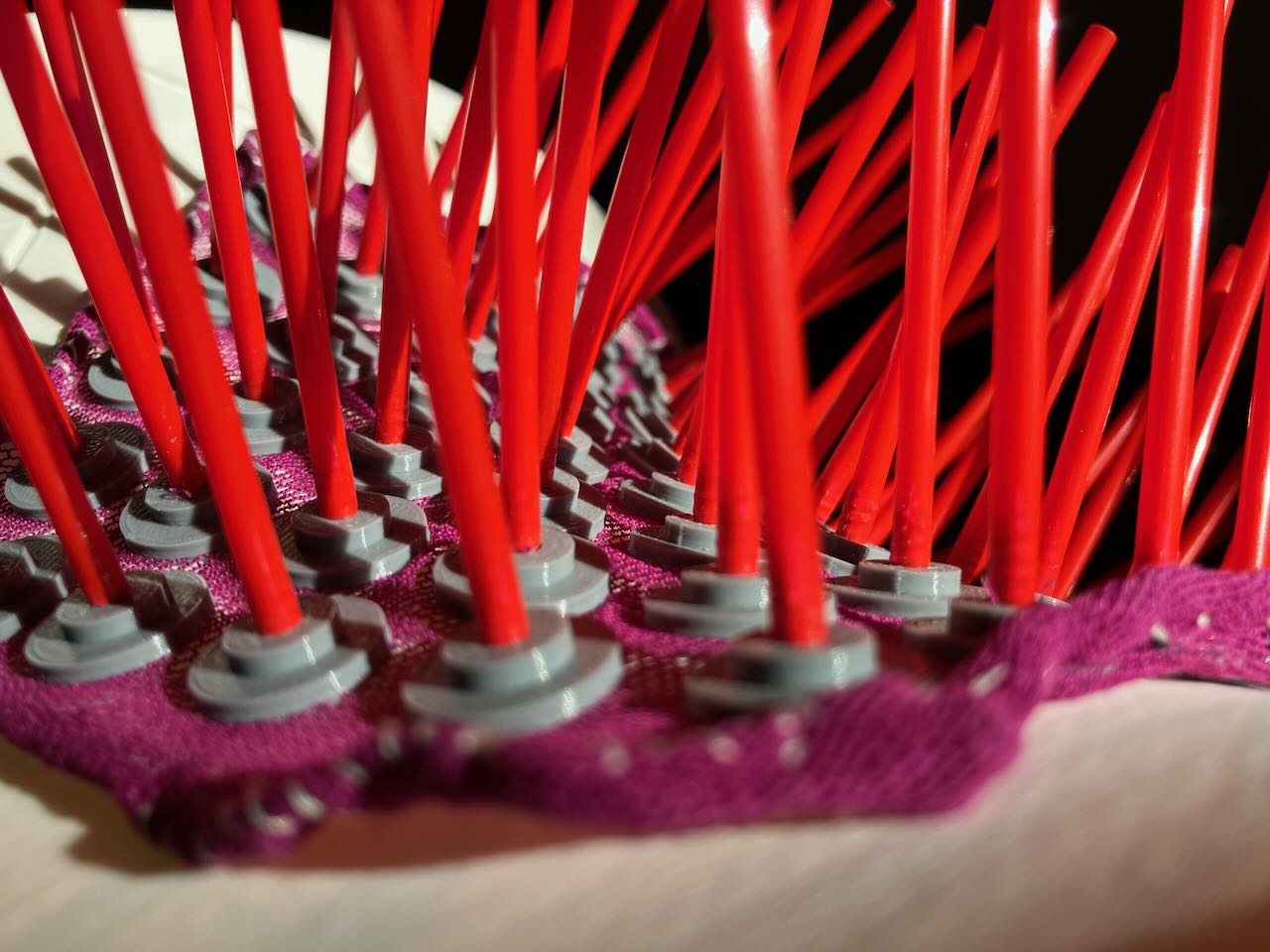
Close up of the normal vectors
Notice how the normals twist as you move along the surface. This is one of the hallmarks of negative curvature. The rate of the twisting is related to the curvature of the surface. This property is essential to my mechanical model of a constant negative curvature surface
Construction
This was made by 3D printing through fabric. I bought some stretchy tulle fabric from the most insane fabric store I’ve ever seen.
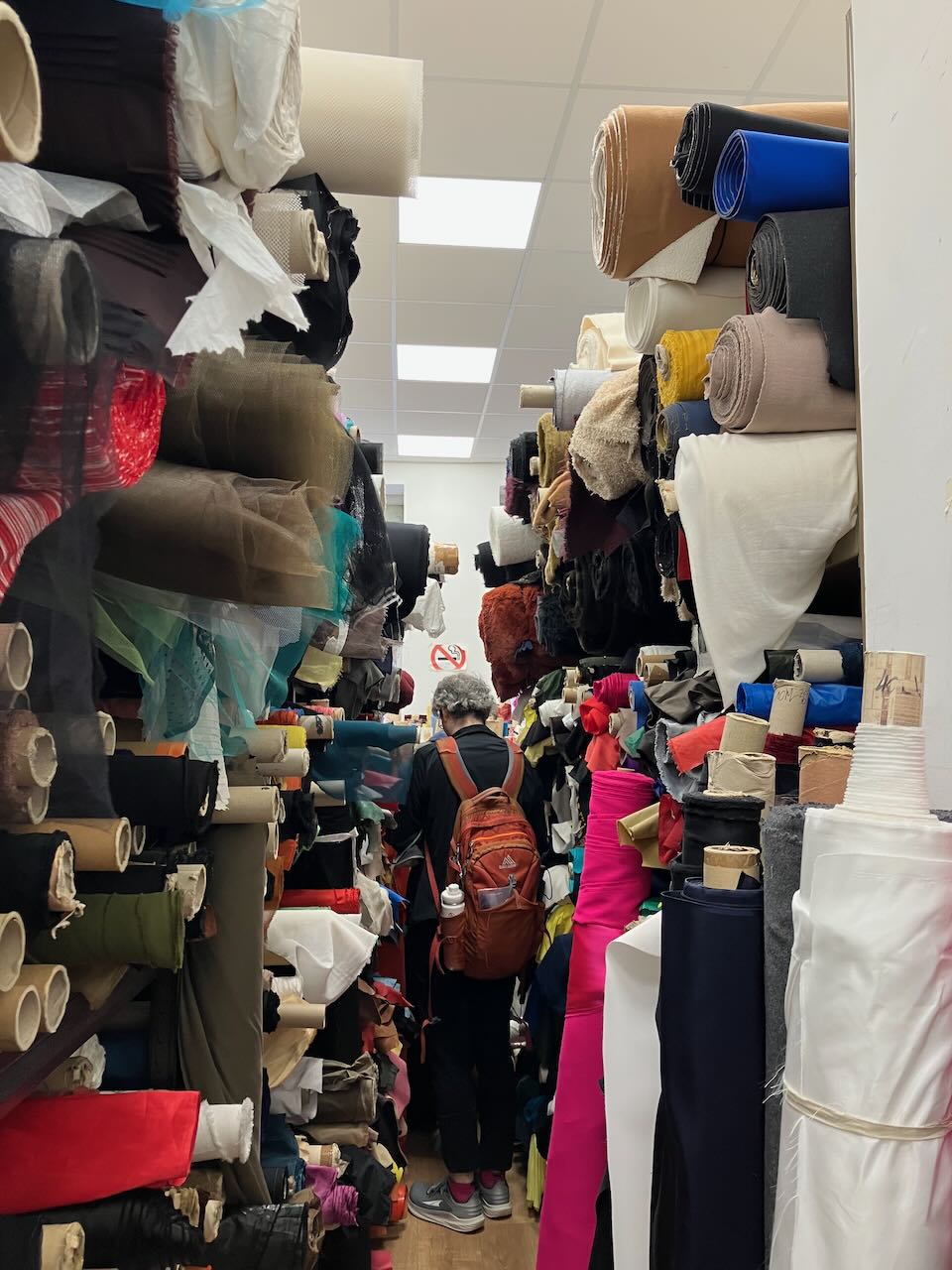
Ah, paris
You 3D print a few layers, then pause the printer. Tape the fabric on top, and resume. The PLA melts through the holes in the tulle. This was the first 3D print I ever made, and it worked really well. Here is a guide. Many thanks with Henry Segerman for designing the model. Here is the STL file, if you’d like to print it yourself.
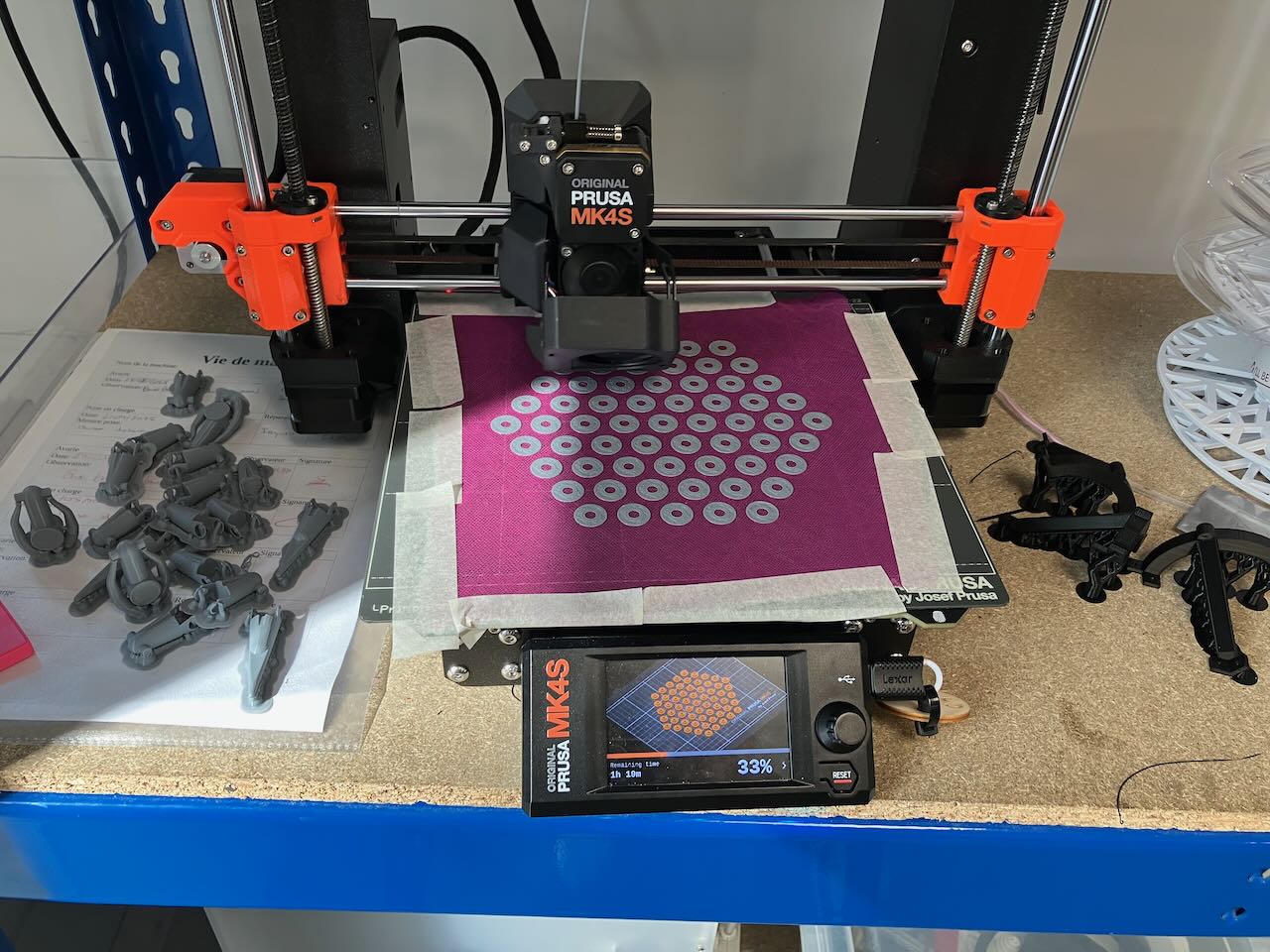
the normal vectors mid 3D print.
Each puck has a hole in it for an M3 screw, with a recess so that the head of the screw is flush with the bottom. After printing, I poke screws through all the holes. Then I add my normal vectors in the form of plastic straws. I used the same straws from this sculpture, which coincidentally were exactly M3 sized. The straws screwed on, held tight by the threads of the screws and acting as a nut.
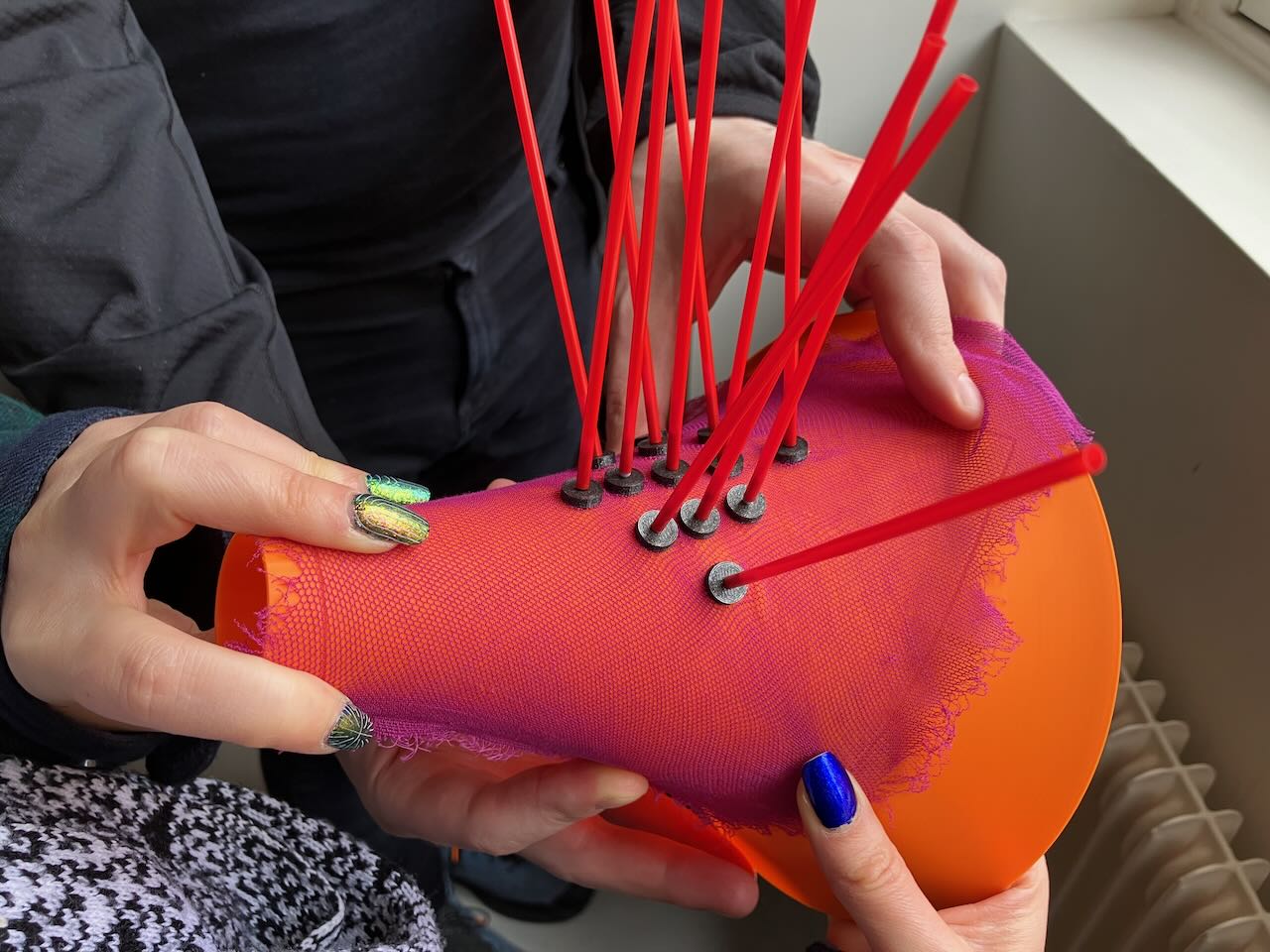
Prototyping