Symplectic city
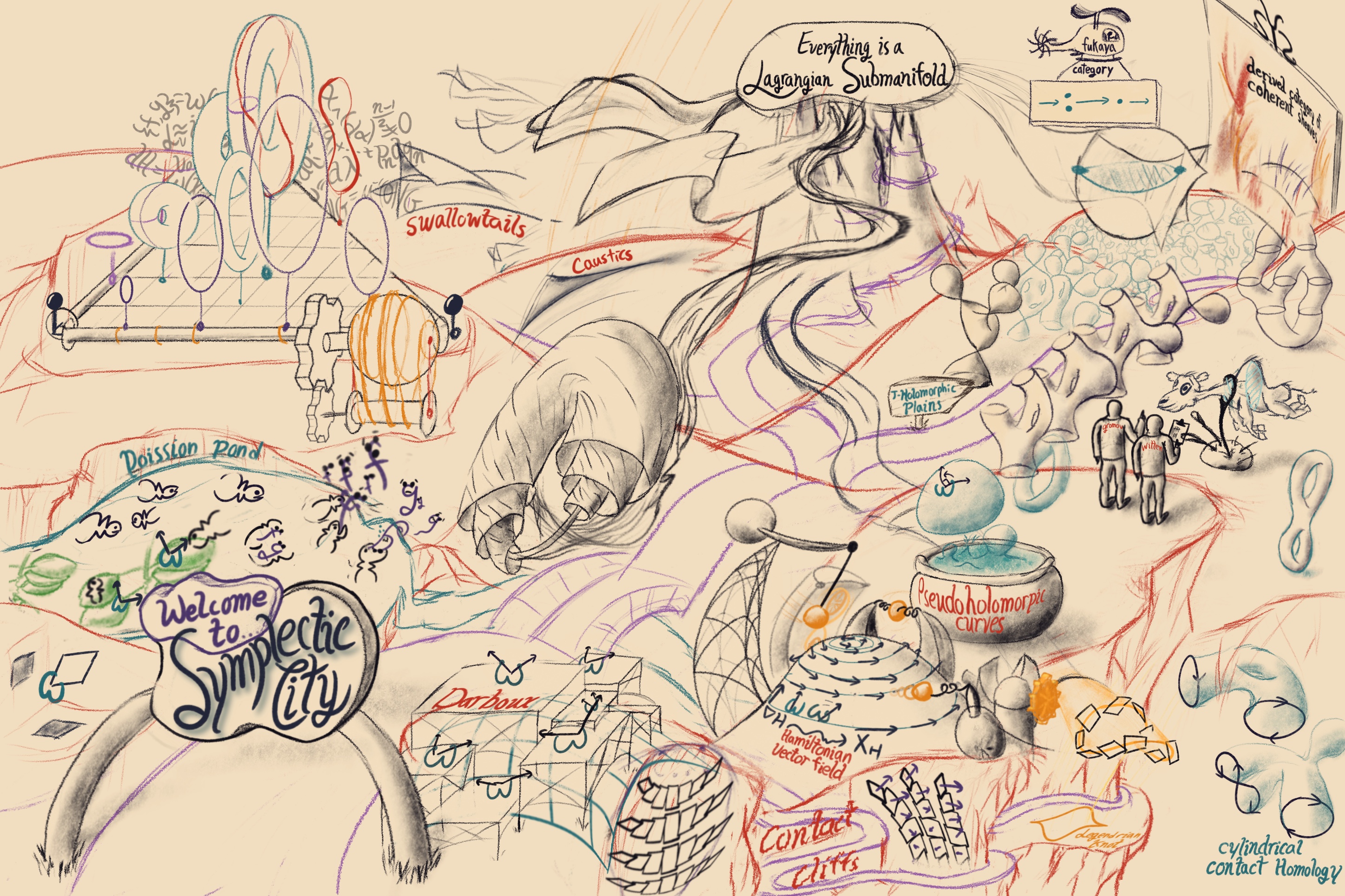
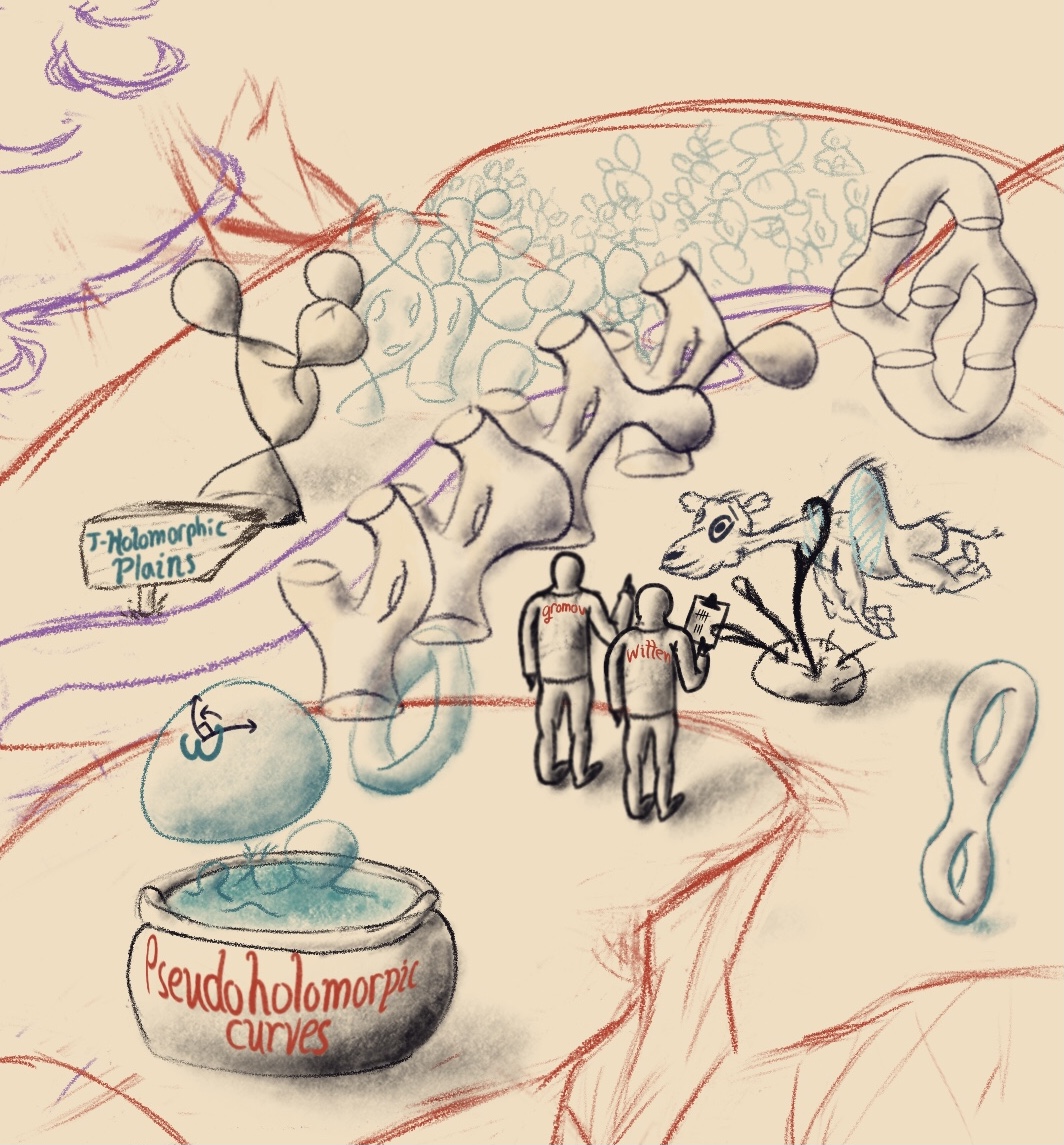
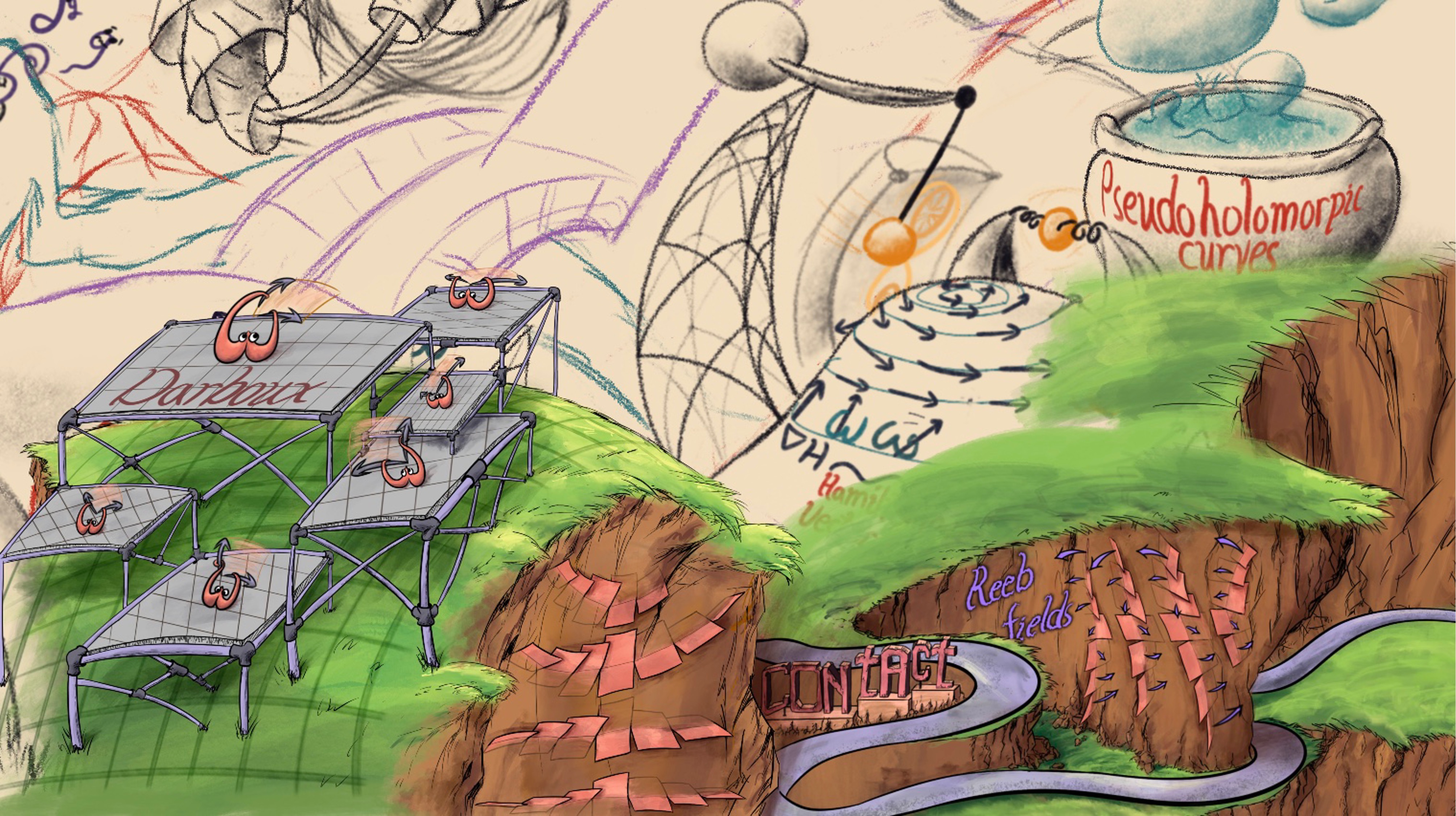
The full sketch of the symplectic city, showing various facets of the field of symplectic geometry. In the other pictures in this gallery, we will take a guided history tour through the symplectic city. For now, here is a roadmap:
- toric geometry (top left)
- Integralbe systems (center left)
- Poission geometry (left)
- The darboux theorrem (right next to the gate)
- The contact cliffs (bottom middle)
- Hamiltonian dynamics (just above the contact cliffs)
- J-curves, and gromov witten invariants (entire right side)
- contact homology (bottom right)
- Fukaya category and mirror symmetry (top right)
- Lagrangian submanifolds (center top)
1. The symplectic form
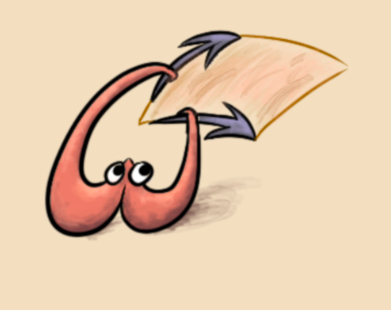
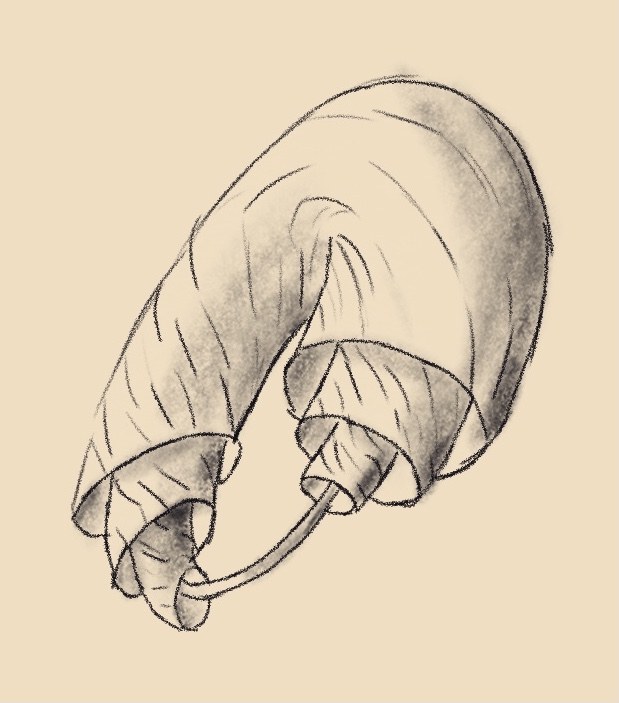
Here’s a picture of the symplectic 2-form, hard at work. It takes in two vectors and turns it into a sum of areas in a non-degenerate way. 2-forms are familiar to geometry, but this one’s special because its closed – Its exterior derivative is 0.
2. The Darboux theorem
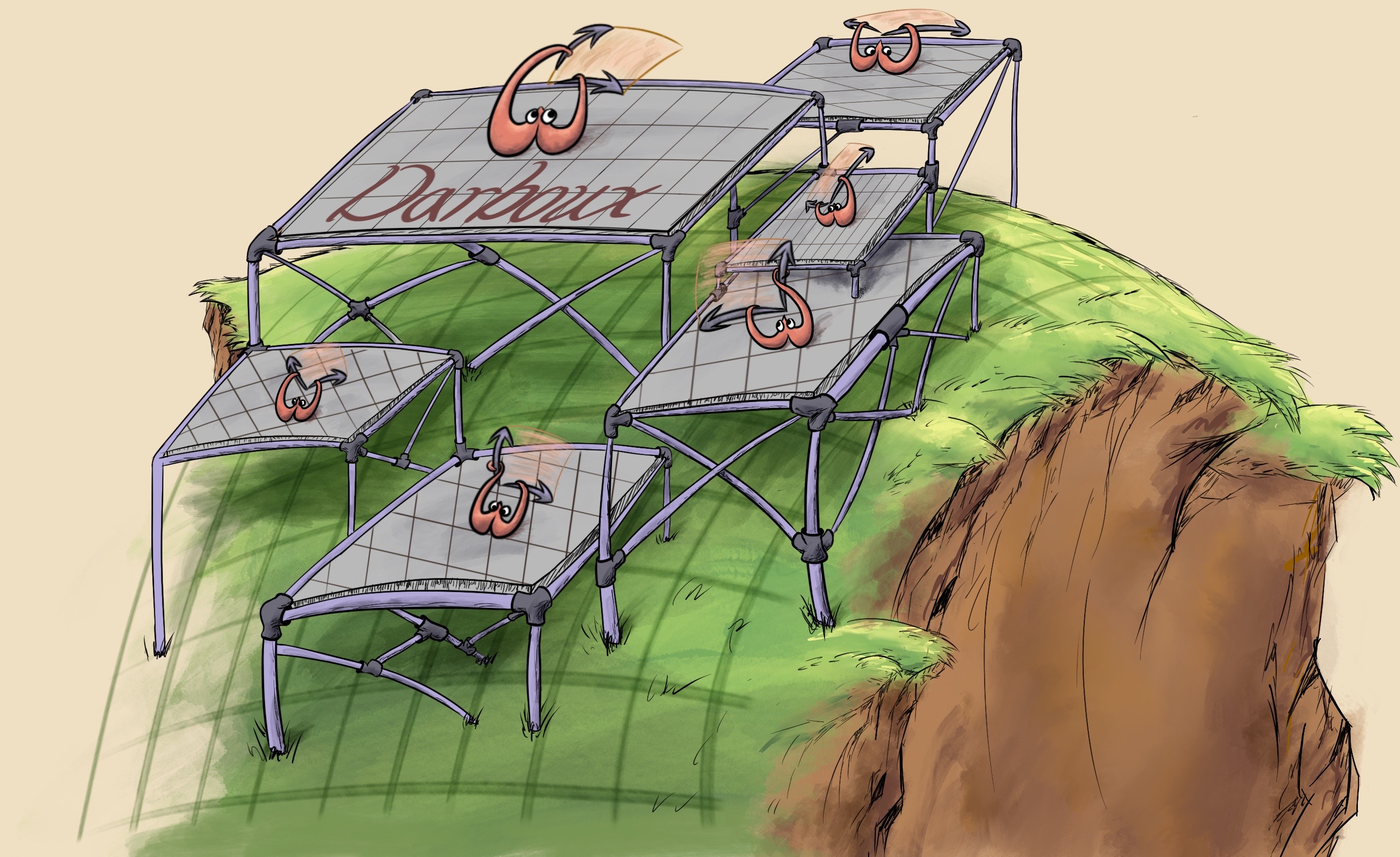
Closed means topology. Closedness gives us Darboux’s theorem: Locally, all symplectic forms are the same! Atop a curvy symplectic manifold, the symplectic form builds a scaffolding of standard, flat symplectic manifolds. All interesting properties of symplectic forms are global. This leands the field of symplectic geometry the pseudonym, symplectic topology.
3. Hamiltonian dynamics
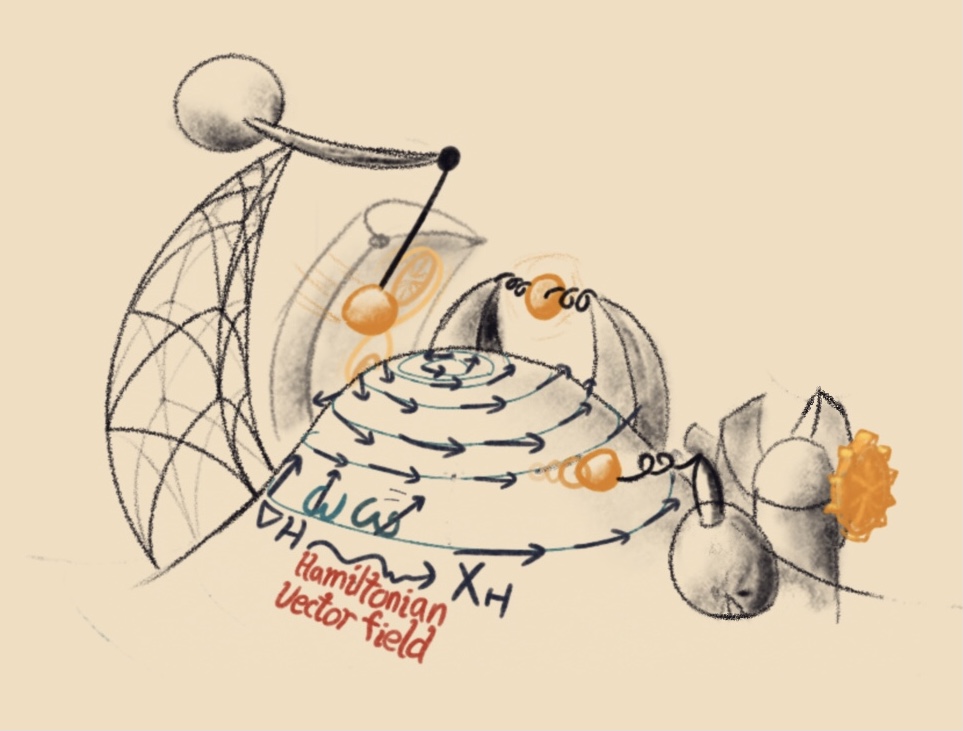
The inspiration for symplectic geometry is classical mechanics. The symplectic form turns functions into “hamiltonian vector fields”, who’s evolution is dynamically interesting. The vector fields skirt around the level sets of the hamiltonian (seen here, circling around the hill). Poincare and the other pioneers of the field first set ground here, becoming interested in symplectic geometry for its dynamical applications circa 1910s.
4. Integrable systems
Classical mechanics used to be cookbook math, with different theories for different systems (like modern PDEs). People tackled problems by looking for symmetries. Maximally symmetric systems have extremely rich and detailed structure, called “integrable systems”. For more drawings of integrable systems, see my slides here
5. Everything is a lagrangian submanifold
1960s: Biiig paradigm shift. Arnold conjectures a precise relationship between dynamics of hamiltonians and topology of manifolds. This forces us to leave behind our cookbooks, and ushers in a renaissance of symplectic geometry.
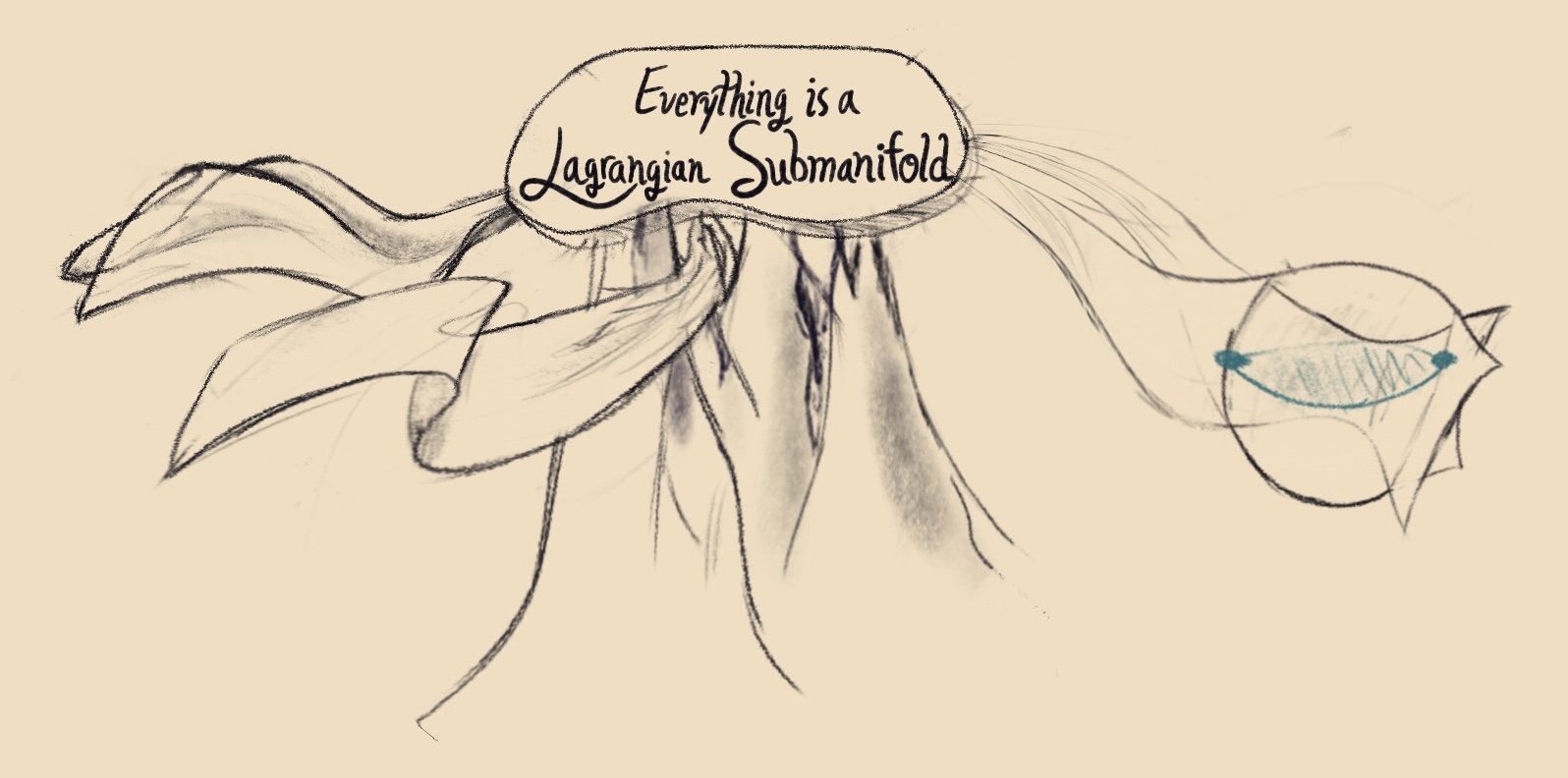
By the 1970s, Everything gets rephrased as general symplectic manifolds, and geometric objects therein. We follow Weinstein’s symplectic creed: “Everything is a Lagrangian submanifold”, half-dimensional manifolds which kill the symplectic form. Notice how the lagrangians extend from the peak overlooking symplectic city, connecting to everything in sight.
6. Gromov Witten invariants and symplectic topology
1980s: Breakthrough time. Gromov does hard analysis, counts number of curves satisfying certain differential equations (“pseudoholomorphic curves”), and solves like 3 open problems in 1 paper. He built the first nontrivial symplectic invariant, and nopes out of the field. Floer extends Gromov’s methods and solves Arnold’s conjecture. Symplectic geometry over, the age of symplectic topology has begun. Tools are incredibly analytically difficult to build, and comparatively easy to use. We moved too fast, leaving shaky foundations.
Concurrently with Gromov, Witten counts the same curves using 2D quantum field theory. Symplectic geometry has evolved from quantum mechanics to quantum field theory, with all of the difficulties that entails. This analogy motivated many future developments.
7. Mirror symmetry
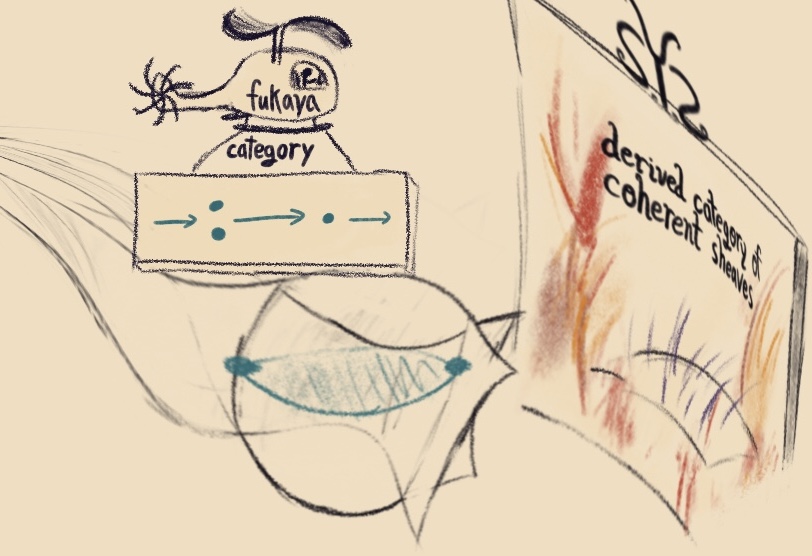
Like mirror symmetry! a QFT duality suggests that symplectic geometry of a space is equivalent to algebraic geometry on a dual space. Kontsevich conjectures this to be an equivalence of categories, but there are many other manifestations. See for example my drawing of mirror symmetry
Nowadays sympletic geometry is a victim of the “Categorification crisis”. we’ve used up all the blunt information from QFT, and now we need to contend with the subtle structures. I’m talking higher categories, stacks, derived geometry, etc. See “symplectic duality”.
8. Contact geometry
This little history dodged around the concurrent evolution of symplectic geometry’s odd dimensional counterpart, contact geometry. Contact geometry lives on the boundary of a symplectic manifold, symbolized here as clinging to the side of the cliff. The hamiltonian vector fields restrict to an intrensic dynamics on any contact manifold, the Reeb vector field.